


If you are buying a home or reviewing your flood insurance in Georgia, one of the first things you will notice is the flood zone.
Zone AE and Zone X are two of the most common designations, but they come with very different expectations around risk, requirements, and cost.
In this guide, you will learn how Zone AE and Zone X compare in Georgia, what the real cost difference looks like, and how those costs impact your decisions as a homeowner.
What Is Flood Zone AE?
Zone AE is considered a high-risk flood zone.
- 1 percent annual chance of flooding
- About a 26 percent chance over a 30 year mortgage
- Lenders require flood insurance if you have a federally backed loan
This is the most common high-risk flood zone in Georgia.
What Is Flood Zone X?
Zone X is considered a moderate to low-risk flood zone.
- Lower flood risk based on FEMA data
- Flood insurance is not required by lenders
- Coverage is still recommended
Flooding still happens in Zone X, even though it is labeled lower risk.
After major events like Hurricane Harvey, more than 70 percent of flooded homes were outside high-risk zones.
Flood Insurance Cost in Zone AE in Georgia
Real Georgia Pricing Data
- As low as $100 per year in favorable situations
- As high as $9,981 per year in higher-risk areas
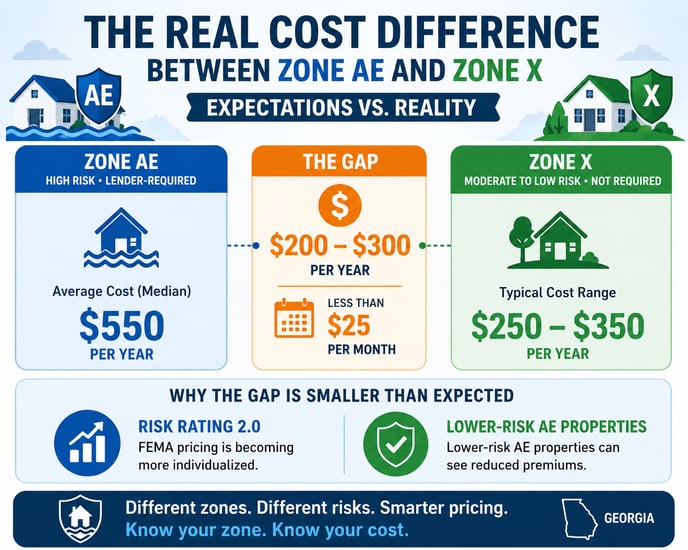
- Median cost around $550 per year across more than 60 residential policies
What Impacts Zone AE Pricing
- Elevation of the home
- Distance to water
- Construction type
- Flood history
Flood Insurance Cost in Zone X in Georgia
Zone X policies are typically more consistent and affordable.
Real Georgia Pricing Data
- $250 to $492 per year for most residential properties
Examples:
- Dustin Bowers in Chickamauga, $250 per year through Neptune
- Amanda Zuber in Rossville, $250 per year through Neptune
- Tommy Holton in Jackson, $492 per year through National General
What This Means for Homeowners
Zone X pricing is generally stable and predictable compared to Zone AE.
Can You Change From Zone AE to Zone X?
When a Change Is Possible
If your property has been incorrectly mapped into Zone AE and elevation data supports it, you may qualify for a Letter of Map Amendment.
What a LOMA Can Do
- Reclassify your property from Zone AE to Zone X
- Remove the lender requirement for flood insurance
What to Know
- Approval depends on elevation data
- The process is handled through FEMA
- There are currently dozens of active LOMA cases in Georgia
A LOMA can be a powerful way to reduce long-term costs if your property qualifies.
Frequently Asked Questions
Is flood insurance required in Zone X?
No. It is optional, but often recommended.
How much more expensive is Zone AE compared to Zone X?
On average, about $200 to $300 more per year, depending on the property.
Can Zone AE be cheaper than Zone X?
In some cases, yes. Favorable elevation and risk factors can lead to lower premiums.
How do I know if I qualify for a LOMA?
You will need an elevation certificate to determine if your property meets FEMA requirements.
Understanding the Real Cost Difference
If you are comparing Zone AE and Zone X in Georgia, the most important takeaway is this, the cost difference is often much smaller than people expect.
The key is to base your decision on actual data, not assumptions.
At Flood Insurance Guru, we help Georgia homeowners compare real costs, understand their risk, and find the best coverage based on their situation. If you are trying to decide between Zone AE and Zone X, click below to access your free flood zone guide.
