

For many long-term disability (LTD) claimants, the struggle to keep working doesn’t stem from just one issue. It’s common to have both physical and mental health challenges—chronic pain, fatigue, or neurological issues often go hand-in-hand with depression or anxiety. But when it comes to insurance claims, this dual diagnosis can create a major risk.
Most LTD policies include a limitation on benefits for mental health conditions, typically cutting them off after 12 or 24 months. That means if your insurance company can classify your disability as primarily mental, they may significantly reduce your benefits—even if your physical condition is truly what’s keeping you from working. So how do you protect your claim?
This guide explains how to prevent your LTD insurer from applying a mental health limitation when your physical condition is the true cause of disability. Key steps include centering your claim on the physical impairment, using objective medical evidence, ensuring records reflect the physical condition as primary, aligning all providers’ documentation, and understanding your policy’s limitation language and exceptions. It also outlines what to do if your claim is misclassified and offers help for denied claims.
Here are five key steps to help ensure your insurance company doesn’t misclassify your disability under a mental health limit.
1. Focus on the Physical Condition as the Primary Cause of Disability
Even when mental health symptoms are present, the foundation of your claim should be built on the physical condition that prevents you from working. This is especially important when you’re dealing with a condition like fibromyalgia, chronic fatigue, or a musculoskeletal issue, where the lines can sometimes blur.
To strengthen your case:
- Ask your doctors to clearly document how your physical condition limits your ability to perform your job duties.
- Request that they avoid vague language and instead provide specific, measurable restrictions—such as inability to sit for more than 30 minutes, or lift more than 10 pounds.
This clarity helps establish your physical condition as the driving force behind your disability, not your mental health symptoms.
2. Use Objective Medical Evidence Whenever Possible
Insurance companies give more weight to objective evidence—meaning data that can be measured or seen through testing—than they do to self-reported symptoms.
That’s why building your claim around diagnostic tests and physical evaluations is so important. Some examples include:
- MRIs or X-rays showing spinal damage or joint degeneration
- Nerve conduction studies indicating neuropathy
- Functional capacity evaluations (FCEs) that objectively assess your physical limitations
The more medical documentation you can provide to support your physical impairments, the less likely it is that your insurer can claim your disability is primarily psychiatric.
3. Be Mindful of How Mental Health is Documented in Your Records
It’s completely normal—and often unavoidable—for depression, anxiety, or other mental health concerns to appear in your medical records. But if these concerns appear to overshadow your physical condition, the insurance company may use them as justification to apply a mental health limitation.
Here’s how to prevent that from happening:
- Talk with your doctors about how your physical and mental health interact. Make sure they’re noting the physical condition as the root cause of your disability, especially if the mental health issues are secondary.
- Ensure any psychological notes are not dominating your treatment records unless those symptoms are independently disabling.
The goal isn’t to hide mental health issues—it’s to make sure the record reflects the full picture, with your physical condition at the forefront.
4. Keep Treating Providers on the Same Page
If you’re seeing multiple providers—such as a primary care physician, specialist, and a therapist or psychiatrist—consistency is key. Conflicting opinions in your medical records can weaken your case and give the insurer room to argue that your disability is psychiatric.
To avoid this:
- Ask all providers to document the same timeline and explanation for your disability.
- If depression or anxiety is part of your case, make sure mental health professionals are clear that those conditions are a result of your physical illness—not the other way around.
Aligned documentation from all treating providers helps reinforce the fact that your disability is physical in nature.
5. Understand Your Policy’s Mental Health Limitation Language
Not all mental health limitations are written the same way. Some policies contain narrow definitions, while others are broad and can be used to cut off a wide range of claims. Knowing how your specific policy defines and limits mental health conditions is crucial.
Here’s what to look for:
- How does the policy define “mental illness”?
- Are there exceptions for neurological or cognitive disorders like dementia or Parkinson’s disease?
- Is there any language about conditions that are caused by—or secondary to—physical illnesses?
Reading the fine print (or having a legal professional review it with you) can help you prepare your claim to avoid falling under a restrictive category.
What to Do If Your Disability Claim Is Misclassified
Living with both physical and mental health conditions is challenging enough. You shouldn’t also have to fight to prove that your disability is legitimate—especially when your physical health is the main reason you can’t work.
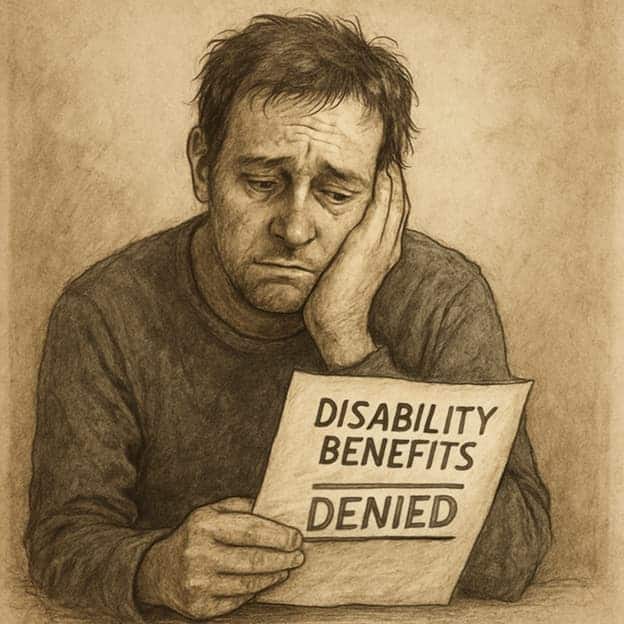
Unfortunately, LTD insurers may try to use mental health limitations to reduce or deny benefits. But with the right documentation, consistent provider support, and an understanding of your policy, you can build a stronger, clearer claim through the administrative appeal process.
Need Help with a Denied Disability Claim?
If your LTD claim has been denied—or if your benefits were cut off due to a mental health limitation—the Ortiz Law Firm may be able to help. We assist claimants nationwide in fighting back against unfair denials and limitations. Call (888) 321-8131 for a free consultation to discuss your options.
Q&A
What’s the risk if my LTD claim is put under a mental health limitation, and how long could benefits last?
Many LTD policies cap benefits for mental health conditions at 12 or 24 months. If your insurer classifies your disability as primarily mental, your benefits may be significantly reduced or cut off sooner, even when a physical condition is the true reason you can’t work.
Should I disclose depression or anxiety if my disability is driven by a physical condition?
Yes—don’t hide mental health symptoms. Instead, make sure your records clearly show the physical condition as the primary cause of disability and the mental health issues as secondary. Work with your doctors so psychological notes don’t overshadow the physical impairments and the records reflect the full picture with the physical condition at the forefront.
What types of medical evidence help prevent a mental health misclassification?
Short answer: Objective evidence carries the most weight. Useful documentation includes:
- MRIs or X-rays that show structural problems (e.g., spinal damage or joint degeneration)
- Nerve conduction studies demonstrating neuropathy
- Functional Capacity Evaluations (FCEs) that measure concrete limits Also ask your doctors to record specific, job-related restrictions (for example, lifting limits or maximum sitting/standing tolerances) rather than vague descriptions.
How can I keep all my treating providers on the same page?
Consistency is critical. Ask each provider to:
- Use the same timeline and explanation for why you’re disabled
- Clearly identify the physical condition as the primary cause
- If applicable, note that depression or anxiety results from the physical illness—not the other way around Aligned documentation reduces the chance an insurer can argue your disability is primarily psychiatric.
What should I do if my insurer misclassifies or denies my claim under a mental health limitation?
Refocus the claim on your physical impairments. Strengthen objective evidence (tests, FCEs), correct records to emphasize the physical condition as primary, and ensure all providers’ notes are consistent. Review your policy’s definition of “mental illness” and any exceptions (such as for certain neurological conditions). If your benefits were denied or cut off, the Ortiz Law Firm assists claimants nationwide—contact us for a free consultation to discuss your options.