


Real Costs, Case Studies, and Smart Ways to Save
Why do some Beach Road homeowners pay $2,800 a year while others pay over $6,000?
And what steps can you take to reduce your flood premium without cutting coverage?
In this guide, you’ll get real numbers from your neighborhood, expert-backed insights, and the exact strategies Fairfield homeowners are using right now to save thousands on flood insurance.
Here’s what you’ll learn:
-
Real flood insurance costs on Beach Road
-
Why rates vary so much
-
How elevation impacts pricing
-
NFIP vs private carrier comparisons
-
Local case studies with savings
-
Common mistakes to avoid
-
Proven strategies to reduce your premium
What Are Real Flood Insurance Costs on Beach Road?
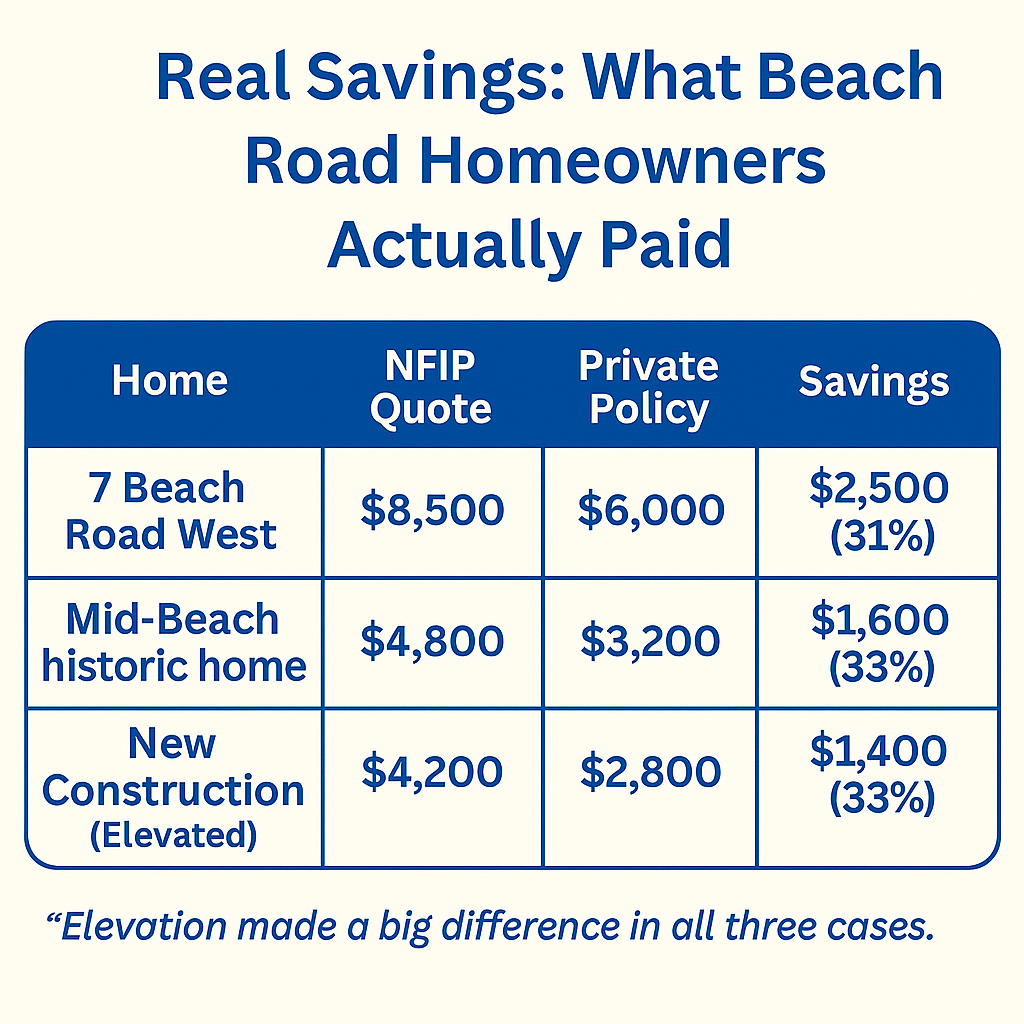
Here’s what homeowners on Beach Road actually pay today:
-
$6,000 per year
7 Beach Road West (Private, 2024) -
$3,200 per year
Mid-Beach Historic Home, after upgrades (was $4,800 NFIP) -
$2,800 per year
Elevated New Construction (Private policy, vs $4,200 NFIP)
Why the difference?
Elevation and flood zone classification make or break your premium. Homes built or elevated above Base Flood Elevation (BFE) qualify for better private-market pricing. Older homes below BFE, especially in VE zones, tend to pay much more.
Why Flood Insurance Is More Expensive on Beach Road
1. Direct Storm Surge Exposure
Beach Road is exposed to storm surge, the top flooding risk in coastal areas.
2. Coastal Flood Zones
Your FEMA flood zone affects your premium.
-
Zone VE: Includes wave action and storm surge exposure, highest pricing
-
Zone AE: Still coastal, but less wave action, more moderate pricing
-
Zone X: Applies to some elevated parcels, lowest risk
Impact: A move from AE to VE can raise premiums by thousands.
How Elevation Impacts Your Flood Insurance Premium
Elevation is one of the biggest drivers of flood cost.
-
Each foot above BFE can reduce your premium by 10 to 25 percent
-
Each foot below BFE increases it significantly
-
Mitigation upgrades, like flood vents or elevated utilities, can cut premiums by 30 to 60 percent
Many older Beach Road homes were built before modern elevation standards, which is why they often pay the highest rates, unless updated.
NFIP vs Private Flood Insurance: What’s the Difference?
| Feature | NFIP (FEMA) | Private Flood Insurance |
|---|---|---|
| Coverage Limits | $250,000 for the structure | $2 to $5 million+ available |
| Claims Process | Standardized but slower | Often faster and more flexible |
| Basement Coverage | Very limited | Broader options may apply |
| Cancellation Rules | Cannot cancel due to claims | Subject to underwriting and cancellation |
| Best Fit | Older, below-BFE, VE zone homes | Elevated, high-value homes with documentation |
NFIP is the baseline for high-risk properties. Private flood insurance rewards elevation and mitigation with better rates and more flexible options.
Common Mistakes That Raise Flood Insurance Costs
-
No Elevation Certificate
Without it, you’re rated at default risk levels. -
Finishing Basements
Finished areas below grade are rarely covered, leading to costly gaps in claims. -
Not Shopping Private Options
Many Beach Road owners overpay by 20 to 40 percent by only using NFIP. -
Not Documenting Mitigation
Missing invoices or photos means no credit for the improvements you’ve made.
Smart Ways to Lower Your Beach Road Premium
1. Get an Elevation Certificate
Hire a licensed local surveyor who understands FEMA rules. Recheck after structural changes.
2. Document All Mitigation
Keep proof of flood vents, elevated HVAC or water heaters, and flood-resistant materials.
3. Compare Quotes Annually
Always compare NFIP with at least three private carriers. Rates shift each year.
4. Consider Mitigation Projects
Raise mechanicals, install vents, or elevate your home. Many owners see 30 to 60 percent savings.
5. Stay Up to Date
FEMA maps and private models evolve. Don’t auto-renew without reviewing your file.
6. Coordinate Flood and Wind
Make sure wind and flood deductibles match and trigger under the same event.
7. Use ICC Funds If Eligible
NFIP’s Increased Cost of Compliance program offers up to $30,000 for required elevation after damage.
Flood Insurance FAQs for Beach Road
What’s the average cost of flood insurance on Beach Road?
Typically $2,800 to $6,000+ annually, depending on elevation, FEMA zone, and foundation type.
Is NFIP or private insurance better?
NFIP works well for older homes in VE zones. Private is often better for newer or elevated homes.
How much can an elevation certificate save me?
Savings of $1,500 to $3,000 per year are common when homes sit above BFE and submit proper documentation.
Does flood insurance cover erosion?
Usually not. Ask your agent about policy endorsements or coastal erosion add-ons.
Are increases guaranteed every year?
Many policies see 10 to 15 percent increases. The right mix of elevation and carrier shopping can slow or reverse that trend.
Cut Your Beach Road Flood Premium, Without Cutting Coverage
We specialize in flood insurance for Connecticut coastal properties, especially along Fairfield’s Beach Road corridor. We’ll compare private and NFIP quotes, review your elevation data, and help you secure better coverage at the best possible rate.
