

If you have a Social Security Disability hearing scheduled, your Administrative Law Judge’s (ALJ) grant rate is one of the most important numbers you can look up before you walk into that hearing room. Understanding what those percentages actually mean can help you set realistic expectations and prepare your case accordingly.
What Does an ALJ’s Grant Rate Actually Mean?
An ALJ’s grant rate—also called an approval rate or allowance rate—is the percentage of Social Security Disability hearings that judge approves. A judge with a 60% grant rate approves 6 out of every 10 cases that come before them.
These rates are publicly available through the Social Security Administration’s ALJ disposition data, which breaks down how many cases each judge has heard and how many were approved, dismissed, or denied. Third-party websites like DisabilityJudges.com also aggregate this data in a more searchable format.
What Do the National Averages Look Like?
According to the SSA’s Waterfall Chart for fiscal year 2025, exactly 50% of all Social Security Disability cases heard at the hearing level were approved. That benchmark—one in two claimants—is the national average your judge’s rate should be measured against.
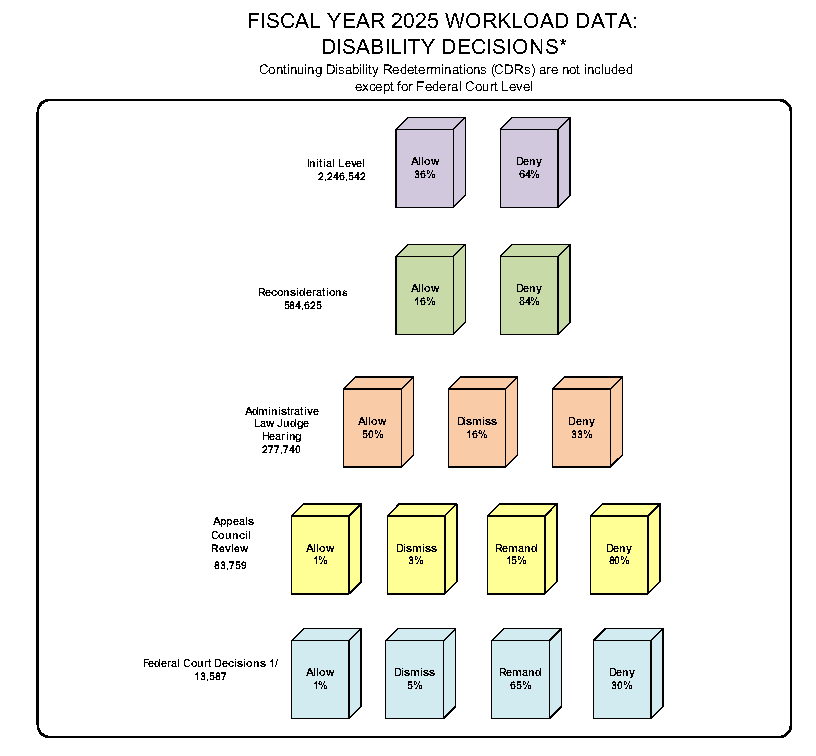
Of the 277,740 hearings held in FY2025, 50% were allowed, 33% were outright denials, and 16% were dismissals. Dismissals can occur when a claimant returns to work and drops their claim, fails to appear at the hearing, or their case is dismissed on procedural grounds. Only the denial and approval percentages reflect how a judge evaluates the merits of a case.
Questions about your upcoming disability hearing? The Ortiz Law Firm handles Social Security Disability claims nationwide. Call (888) 321-8131 today.
How Do You Interpret Your Judge’s Grant Rate?
Is a Grant Rate Below 40% a Bad Sign?
A grant rate below 40% signals that you are before one of the tougher ALJs in the country—someone who approves fewer than 4 out of every 10 claimants. At this level, it is especially important to build the strongest possible medical record and present a thorough, well-documented case.
Judges at this level are not impossible to win in front of, but they demand more. An experienced disability attorney can help you anticipate the higher bar and make sure your evidence meets it.
Is a Grant Rate Between 40% and 60% Considered Average?
A grant rate in the 40%–60% range places your judge squarely in the average category. Since the national average sits at exactly 50%, a judge in this range is neither unusually generous nor unusually strict—you have a realistic shot at approval with a solid, well-prepared claim.
Drawing an average judge is not a bad outcome. It simply means the strength of your evidence and how well your case is presented will drive the result more than the judge’s individual tendencies.
Is a Grant Rate Over 60% a Good Draw?
A grant rate above 60% means your judge approves more cases than the national average, and anything above 70% is an exceptionally favorable draw. A judge at 72%–73%, for example, is approving nearly three out of every four claimants who appear before them.
Even with a high-granting judge, this does not mean your case is a guaranteed win. You still need to meet the SSA’s medical criteria and present complete, credible documentation. But a higher grant rate does indicate a more claimant-friendly approach to evaluating evidence.
Where Can You Look Up Your ALJ’s Grant Rate?
There are two primary sources for ALJ grant rate data.
- The SSA publishes official ALJ Disposition Data that lists each judge’s total decisions, broken down by fully favorable, partially favorable, and unfavorable outcomes. You can calculate a grant rate directly from those numbers.
- Third-party aggregator sites like DisabilityJudges.com pull from that same government data and present it in a searchable format that is easier to navigate.
Either source will give you the numbers you need—just make sure you are looking at recent data, since grant rates can shift from year to year.
Your judge’s approval rate is just one piece of the puzzle. Ortiz Law Firm helps claimants build winning cases regardless of who’s on the bench. Call (888) 321-8131 for a free case review.
Does a High Grant Rate Guarantee You’ll Win?
No—a judge’s grant rate reflects their general tendencies, not a guarantee for any individual case. Even judges who approve 80% or 90% of cases deny claimants whose medical evidence does not meet the SSA’s standards. The grant rate tells you how the judge tends to evaluate borderline cases, not how they will rule on yours specifically.
Conversely, even judges with rates as low as 11%–14% can be won in front of—it simply requires an exceptionally well-documented case. Your odds are shaped by your evidence, your medical records, and how your claim is presented, not just the judge’s historical numbers.
Frequently Asked Questions
What is considered a good ALJ grant rate for Social Security Disability?
Anything above 60% is generally considered a good draw. Grant rates above 70% are exceptional. The national average for FY2025 sits at 50%, so any judge above that mark is more claimant-favorable than the typical ALJ. Rates below 40% indicate a particularly strict judge.
What percentage of Social Security Disability hearings are approved nationally?
According to SSA’s FY2025 Waterfall Chart, 50% of the 277,740 hearings held that year resulted in an approval. An additional 33% were denied outright, and 16% were dismissed for procedural reasons or at the claimant’s request.
Where can I find my ALJ’s grant rate before my hearing?
Two main sources: the SSA’s official ALJ Disposition Data (published on the SSA website) and third-party aggregators like DisabilityJudges.com. Both pull from the same government records. Your disability attorney can also look this up for you and explain what the numbers mean for your specific case.
Can I request a different ALJ if mine has a very low grant rate?
Claimants generally cannot pick their ALJ. However, if you have a legitimate concern about bias or a conflict of interest, your attorney may be able to raise that issue. The best strategy with a tough judge is to build an especially strong, well-documented case rather than attempting to change the assignment.
Does a low ALJ grant rate mean I should give up on my claim?
No. Even judges with grant rates in the 10%–20% range do approve cases—those claimants simply needed airtight medical evidence. If you have a legitimate disability, a thorough medical record, and strong legal representation, you can win before even the strictest ALJ.
What is the difference between a dismissal and a denial at an ALJ hearing?
A denial means the judge reviewed your case on the merits and ruled you do not qualify. A dismissal means the case was closed without a merits decision—common reasons include the claimant not appearing at the hearing, filing the appeal late, or voluntarily withdrawing the claim after returning to work.