


Flood insurance in Connecticut is more complicated, and often more expensive, than many homeowners expect.
Between coastal flood risks, FEMA flood zones, rising rebuilding costs, and changes under Risk Rating 2.0, many property owners are unsure whether they have the right flood coverage or if they are paying more than necessary.
In this guide, you will learn why flood insurance costs more in Connecticut, how FEMA calculates premiums, the difference between NFIP and private flood insurance, and what steps may help lower your premium without sacrificing protection.
Why Flood Insurance Costs More in Connecticut
Coastal Flood Risk
Properties near the shoreline face elevated risks from:
- Storm surge
- Hurricanes
- Heavy rainfall
- Coastal flooding
Homes located in coastal flood zones like AE and VE typically carry the highest premiums because these areas have a greater likelihood of severe flood damage.
Higher Property Values
Flood insurance premiums are partially influenced by replacement cost value.
Because Connecticut homes often have higher rebuilding costs than homes in many other states, insurance premiums are frequently higher as well.
Severe Weather Exposure
Connecticut experiences strong coastal storms, tropical systems, and heavy rain events that increase flood risk throughout the state. Even inland properties can experience flash flooding and water damage from severe storms.
How Risk Rating 2.0 Changed Flood Insurance in Connecticut
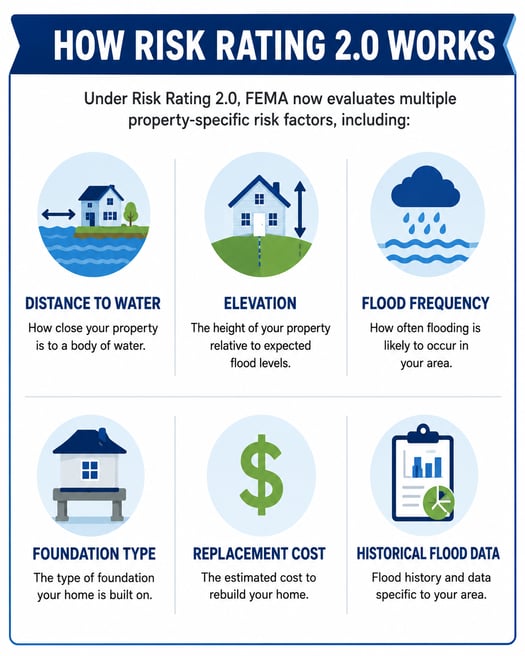
FEMA’s Risk Rating 2.0 significantly changed how flood insurance premiums are calculated under the National Flood Insurance Program, also known as the NFIP.
What This Means for Connecticut Homeowners
Some Connecticut homeowners are seeing:
- Higher premiums in coastal areas
- More personalized pricing
- Increased rate differences between neighboring homes
Meanwhile, some inland and lower-risk properties may qualify for more affordable rates than under the old system.
Because pricing can change substantially under Risk Rating 2.0, reviewing flood insurance annually is more important than ever.
Understanding Connecticut Flood Zones
Your flood zone remains one of the biggest factors influencing your flood insurance premium.
High-Risk Flood Zones
High-risk flood zones generally require flood insurance if you have a federally backed mortgage.
Common high-risk zones in Connecticut include:
AE Zones
AE Zones are areas with a 1% annual chance of flooding, commonly called the 100-year floodplain.
VE Zones
VE Zones are coastal flood areas exposed to wave action and storm surge.
These zones often carry the highest flood insurance premiums due to elevated flood severity risk.
Moderate- and Low-Risk Flood Zones
Lower-risk flood zones include:
X Zones
X Zones are considered moderate- or low-risk areas. However, flooding can still occur in these locations. In fact, many flood claims occur outside high-risk flood zones. Flood insurance may still be worth considering even if your lender does not require it.
NFIP vs. Private Flood Insurance in Connecticut
Connecticut property owners usually have two primary flood insurance options:
- National Flood Insurance Program (NFIP)
- Private flood insurance carriers
National Flood Insurance Program (NFIP)
The NFIP is federally backed and provides standardized flood insurance policies nationwide.
Benefits of NFIP Coverage
- Widely accepted by mortgage lenders
- Available in most flood-prone areas
- Standardized coverage structure
- Consistent underwriting guidelines
Limitations of NFIP Policies
- Coverage caps may be limiting for high-value homes
- Fewer customization options
- Premiums can be expensive in high-risk areas
Private Flood Insurance
Private flood insurance has become increasingly popular in Connecticut.
Potential Advantages of Private Flood Insurance
- Higher coverage limits
- More flexible policy structures
- Competitive pricing for some properties
- Additional living expense coverage in some cases
Potential Drawbacks
- Carrier availability may change
- Underwriting guidelines can shift
- Some carriers may non-renew properties in high-risk areas
How Elevation Impacts Flood Insurance Premiums
Why Elevation Matters
Properties below expected flood levels are considered more likely to experience flood damage. That increased risk raises premiums.
What Is an Elevation Certificate?
An Elevation Certificate is a document prepared by a licensed surveyor or engineer that includes:
- Property elevation data
- Flood zone information
- Building characteristics
- Base flood elevation comparisons
Can an Elevation Certificate Lower Premiums?
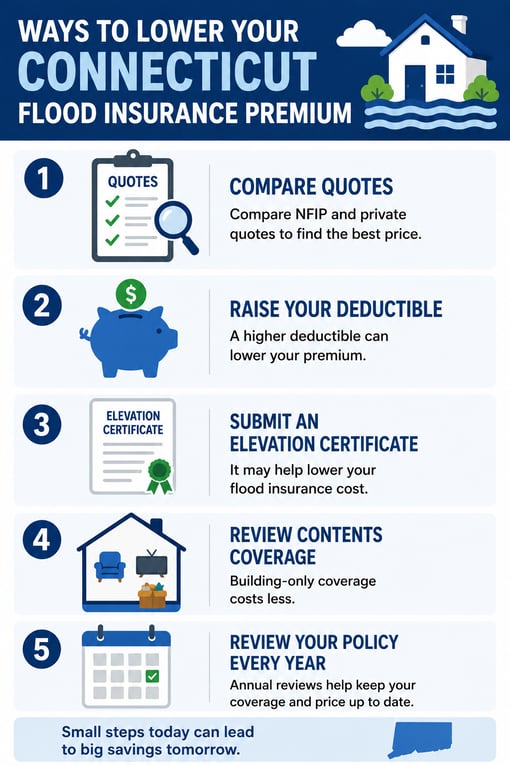
Sometimes, yes. If the certificate demonstrates lower flood exposure than FEMA assumptions, it may help reduce flood insurance costs.
This is especially important for coastal Connecticut properties.
Frequently Asked Questions
Is flood insurance required in Connecticut?
Flood insurance is generally required if your property is located in a high-risk flood zone and you have a federally backed mortgage.
How much does flood insurance cost in Connecticut?
Costs vary based on flood zone, elevation, replacement cost, and coverage limits. Residential policies in Connecticut often average around $2,200 annually, while commercial policies may average $4,500 or more.
Does homeowners insurance cover flood damage?
No. Standard homeowners insurance policies usually do not cover flood damage. Flood insurance must be purchased separately.
What flood zones are most expensive in Connecticut?
AE and VE flood zones typically have the highest premiums because of elevated flood and storm surge exposure.
The Bottom Line on Connecticut Flood Insurance
Flood insurance in Connecticut can be expensive, but understanding how pricing works can help you make smarter coverage decisions.
Comparing NFIP and private flood insurance options, reviewing your policy annually, and understanding your property’s flood risk can help you find the right balance between protection and affordability.
At Flood Insurance Guru, we help homeowners and business owners review flood insurance options and identify coverage that fits their property and budget. Click below to access your free comparison guide.