

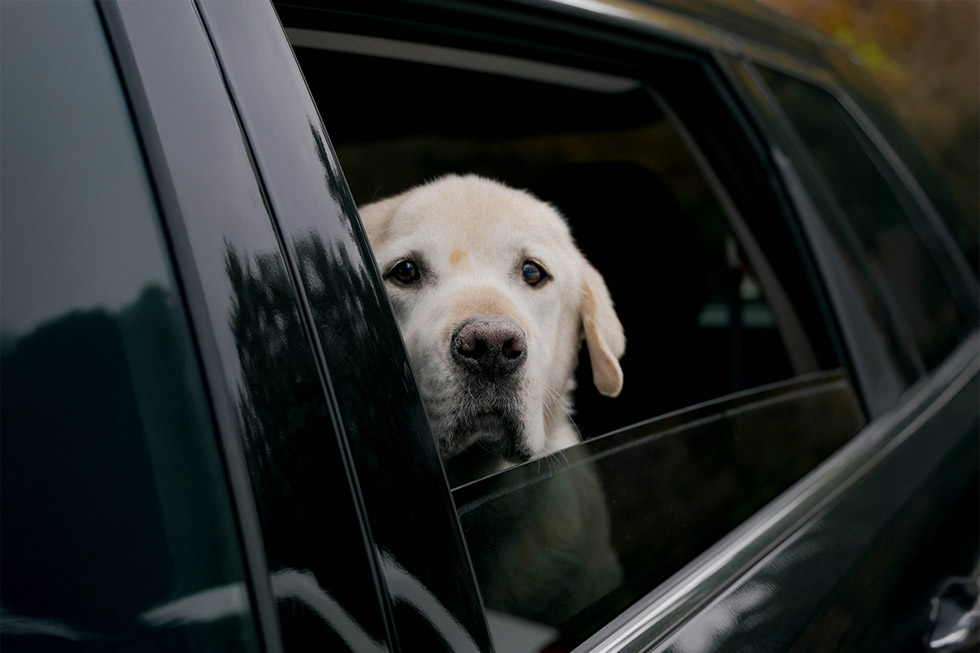

NSW applauded for tough stance on dogs in hot cars. Pet Insurance Australia urges “zero excuses” as new offence flagged for 2026
Sydney, NSW — [January 2026] — Pet Insurance Australia has welcomed New South Wales’ move to strengthen animal welfare laws by flagging a specific offence for leaving dogs unattended in hot vehicles, describing the reform as a crucial step to prevent entirely avoidable suffering and deaths.
“This has been a massive problem for decades, and the message doesn’t seem to be getting through just how dangerous a parked car is for a dog, even with the windows down, and in cooler weather,” said Nadia Crighton, spokesperson for Pet Insurance Australia. “With temperatures soaring across Australia, all pet owners need to keep dogs out of cars unless they are supervised.”
Under the NSW Government’s proposed changes, people who leave a dog in a hot car could face penalties of up to $44,000 or up to 12 months’ imprisonment, making it easier for authorities to act before a tragic outcome occurs.
“Dogs don’t sweat as we do; they overheat fast, and a parked car turns into a heat trap in minutes,” she warns. “We applaud NSW for taking a stronger stance. The message needs to be simple: if you wouldn’t sit in that car, your dog can’t either. If you cannot take your dog to the destination or stop off, please leave them at home. ”
Why these rules matter: cars heat up faster than most people realise
Research shows a vehicle’s interior temperature rises rapidly and predictably, even when the day doesn’t feel extreme. A widely cited medical study found that around 80% of a car’s total temperature rise happens in the first 30 minutes, and that the heating rate is not significantly different across a range of outside temperatures, meaning “mild” days can still become dangerous inside a vehicle.
“It’s not just the scorching days,” Crighton said. “Even when it feels ‘not too bad’, the greenhouse effect inside a car can push conditions into the danger zone incredibly quickly.”
“What’s most concerning is that this isn’t new information,” says Crighton, spokesperson for Pet Insurance Australia. “A Stanford University study* showed that on a mild 22-degree day, a parked car can reach 47 degrees within an hour. On hotter days, it becomes dangerous far faster.”
A separate study by the Louisiana Office of Public Health* found that temperatures inside parked vehicles exceeded 51 degrees in just 20 minutes, even under partly cloudy conditions.
“These studies are years old, yet dogs are still dying in hot cars,” Crighton says. “That tells us the message isn’t getting through. Twenty minutes can vanish quickly, a long checkout line or a quick chat is all it takes.”
At these temperatures, dogs are unable to regulate their body heat. Cells begin to die, organs start to shut down, and heatstroke can become fatal in minutes.
- Reports from animal welfare organisations warn that cars can reach dangerous temperatures rapidly, even on milder days (e.g., around low-20s °C), and that cracked windows or shade are not reliable protection.
- NSW has publicly indicated that the new offence is intended to be clearer and easier to enforce than relying on broader cruelty provisions alone.
Pet Insurance Australia hopes that all states will adopt harsher penalties for leaving dogs in hot cars.
“There is no excuse to leave a dog or a cat in a car,” Crighton says. “If you cannot take the pet with you, please leave them at home. Hot car deaths are 100% avoidable.”
How many pets are affected?
A single national “hot car deaths” figure is difficult to verify because reporting is fragmented across jurisdictions and agencies. However, welfare organisations report hundreds of cases and calls each year.
- RSPCA Queensland says it receives nearly 700 calls a year about dogs left unattended in hot vehicles.
- Reporting in NSW references hundreds of reports over multiple years to RSPCA NSW.
“Whether it’s one dog or one hundred, it’s preventable, and that’s why strong enforcement and public education matter,” Crighton said. “We see a lot of heatstroke claims throughout the year, and some of these could be attributed to dogs in hot cars. In 2025, our highest heatstroke claim amount was $11,382.95*. This showcases how difficult heatstroke can be to treat with veterinary care, and how deadly overheating can be for your canine companion.”
What Pet Owners Should Do
Pet Insurance Australia is urging pet owners to adopt a simple rule: leave pets at home when running errands, or ensure a second adult stays with the pet and the car remains safely cooled.
Key reminders:
- Never leave a pet in a parked car, even “for a minute”.
- Shade and cracked windows are not enough.
- If you see a dog in distress in a vehicle, contact local authorities or an animal welfare hotline immediately.
“NSW’s proposed reforms are a win for common sense and compassion,” Crighton said. “These rules will help stop people gambling with an animal’s life, because the outcome can be irreversible, and it can happen frighteningly fast.”
* http://pediatrics.aappublications.org/content/116/1/e109
* http://pediatrics.aappublications.org/content/pediatrics/116/1/e109.full.pdf
Featured By
Post Views: 1

Nadia Crighton is a renowned and accomplished professional in the fields of Journalism, Public Relations, and Writing, with an extensive career spanning over 25 years, 20 of which have been dedicated to promoting the health and well-being of pets.