

You’ve told your doctors you’re in pain. You’ve explained the fatigue is overwhelming. But when it comes to your disability claim, is that enough? For thousands of people who get denied, the surprising answer is no. The key isn’t just proving you have a medical condition; it’s showing exactly how that condition limits you, day in and day out.
Think of your disability claim like building a case for a jury. Your diagnosis of “degenerative disc disease” or “major depression” is the starting point, but it isn’t the winning argument. The claims examiner reviewing your file sees hundreds of similar diagnoses. What they don’t see, unless you show them, is how your reality translates into specific, work-related limitations.
This is the critical gap where many claims fail. An examiner needs to understand not just that you have arthritis, but that because of it, you cannot type for more than 15 minutes or lift a 10-pound box. Knowing how to describe your limitations is more important than the diagnosis itself, and medical documentation requirements are built around this need for clear, functional details.
This guide will show you how to translate your daily struggles into the language the Social Security system understands. You’ll learn to work with your doctors to ensure your medical records paint a full, accurate picture of your abilities, highlighting the importance of consistent medical treatment that documents your true challenges.
From ‘My Back Hurts’ to ‘I Can’t Sit for More Than 20 Minutes’: The Language of Disability Claims
It’s natural to tell your doctor, “My back hurts” or “I’m always tired.” For a disability claim, however, these statements alone don’t paint a clear picture. The person reviewing your file has never met you; they need to understand not just what you feel, but what those feelings prevent you from doing. The key is learning how to translate your symptoms into concrete, measurable limitations, also known as functional restrictions.
A simple way to do this is by using the “Symptom-to-Restriction” formula. It’s a quick mental check that connects your experience to real-world limits. For any symptom you have, just follow these steps:
- Identify the Symptom: e.g., Numbness and weakness in my hands
- Ask, “So What?”: What does this stop me from doing?
- State the Restriction: e.g., I cannot type for more than 10 minutes, and I frequently drop objects heavier than a carton of milk.
See the power in that? While “numb hands” is a valid symptom, “cannot type for more than 10 minutes” is a specific, work-related limitation. This is how you convey your struggles in a way an examiner can use to understand why you can’t work. The most effective way to gather this specific information is by tracking your pain and symptoms daily.
How to Create a Daily Activity Journal That Proves Your Limitations
Thinking back over the last month to recall every moment your symptoms stopped you in your tracks is nearly impossible. This is where a simple daily activity journal becomes your most powerful tool. It’s not a diary for your feelings, but a logbook for your limitations. By tracking your pain and symptoms daily, you gather concrete evidence that shows a consistent pattern of difficulty, which is exactly what a claims examiner needs to see.
To make this easy and effective, you don’t need to write essays. Just focus on a few key details whenever you attempt an activity and find yourself limited. Think of each entry as a snapshot of a specific struggle. A consistent record, even with just one or two entries per day, quickly builds into compelling proof.
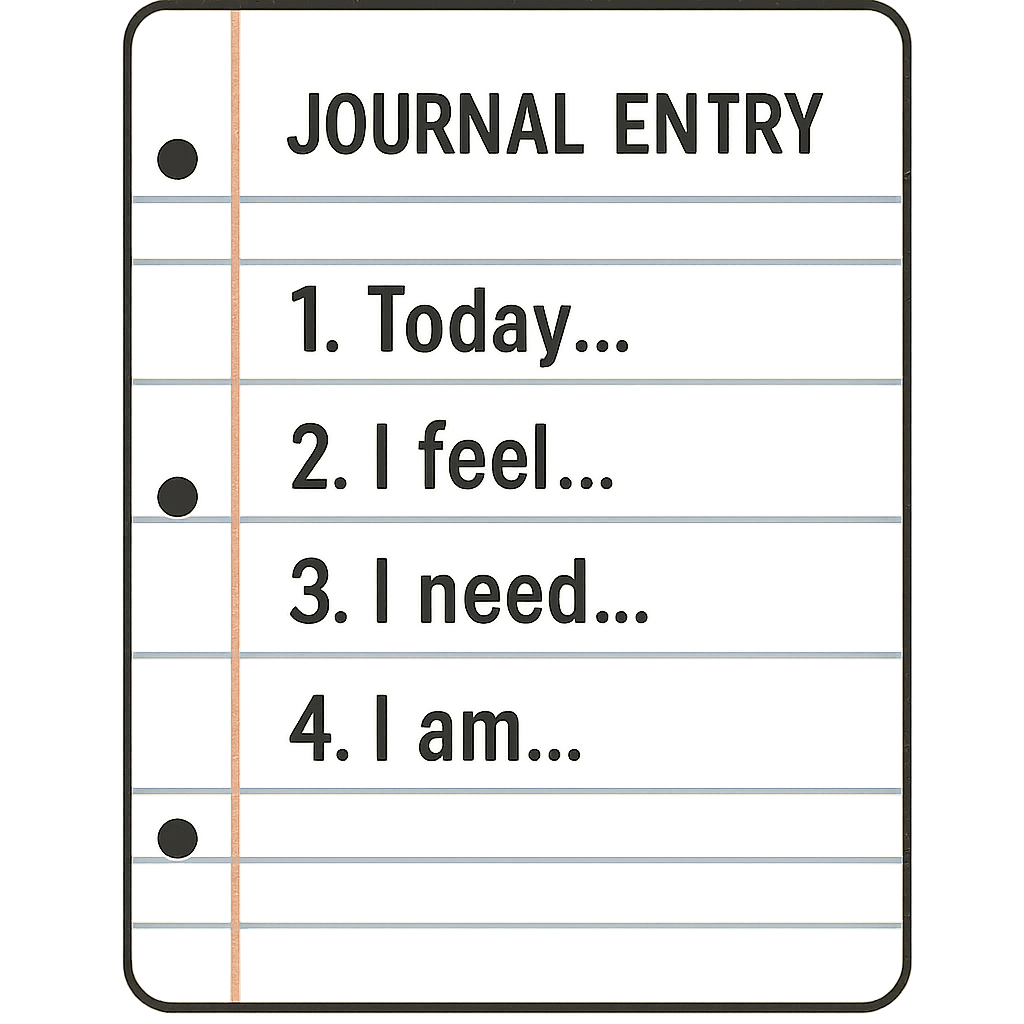
For each entry in your journal, jot down these four simple points:
- Activity Tried: What were you trying to do? (e.g., “Mop the kitchen floor,” “Attend my child’s school play.”)
- What Happened (The Restriction): Why couldn’t you do it, or what was the result? Be specific. (e.g., “Had to stop after 5 minutes due to shooting back pain,” “Had to leave after 20 minutes because the noise triggered overwhelming anxiety.”)
- Pain/Symptom Level (1-10): Rate the severity of the symptom that caused the restriction.
- Help Needed / Time Taken: Did you need someone to help you finish? Or did an activity take much longer than it should have?
Over weeks and months, this log transforms your general statement of “I’m always in pain” into an undeniable record: “On 15 separate days this month, my back pain (rated 8/10) prevented me from standing for more than 10 minutes.” This journal is the evidence you will bring to your next appointment, and it’s the key to helping your doctor understand and document your true work-related restrictions.
How to Turn Your Doctor Into Your Strongest Advocate
Armed with your new activity journal, your next doctor’s visit is a crucial opportunity. Many people assume their physician automatically knows what to include in their medical records for a disability claim, but that’s rarely the case. Doctors are focused on your treatment and recovery, not the specific language a claims examiner needs to see. Your job is to gently guide the conversation and provide them with the evidence—your journal—to help them document your reality.
The focus of your conversation needs to shift slightly. While treatment is vital, for your claim, the key is documenting your current abilities. Your doctor is used to questions like, “When will I get better?” Now, you’ll be guiding them toward answering, “What can I realistically do today?” This helps them record the specific details that form the foundation of strong medical documentation required for filing disability claims.
To make this conversation easier, bring your journal and be ready to ask clear, direct questions. This helps you get a supportive letter from your doctor by giving them exactly what they need to write it. Consider asking:
- “Based on the journal I brought, can you document these specific limitations in today’s notes?”
- “What is your medical opinion on how long I can sit, stand, and lift during a typical workday?”
- “Would you be willing to write a letter or fill out a form detailing these work-related restrictions for my claim?”
Getting your doctor’s opinion on your work-related abilities on paper is the single most effective way to strengthen your claim. This information gives the claims examiner a clear, professional assessment of your limits. With this official documentation, you provide the facts needed to build an accurate picture of what you can and cannot do.
RELATED POST: Why Your Doctor Must Document Your Functional Limitations
Decoding the ‘Work Ability Profile’: What Social Security Really Wants to Know
After you and your doctor document your limits, that information goes to a claims examiner who has never met you. Their job is to create an official picture of what you can still do despite your condition. They aren’t just looking for a diagnosis; they are trying to answer a very specific question: “What is this person capable of doing, physically and mentally, during an 8-hour workday?” This assessment is the single most important part of your claim.
The Social Security Administration has a technical name for this picture: ‘Residual Functional Capacity,’ or RFC. It’s far easier to think of it as your ‘Work Ability Profile.’ This profile isn’t just about how much you can lift. It’s a comprehensive summary of your capabilities, covering your ability to sit, stand, walk, focus, remember instructions, and even handle interactions with coworkers and the public. It’s the tool they use to decide if there is any job you can still perform.
Without your detailed input, the examiner has to build this profile based on limited medical records and their own assumptions. When you learn how to fill out an SSA function report and provide clear evidence for your restrictions, you replace their guesswork with facts. An accurate Work Ability Profile, built from your real-life experiences, gives you the strongest possible chance for a fair decision.
Proving Your Physical Limits: How to Document Sitting, Standing, Lifting, and Walking
When it comes to building your Work Ability Profile, vague statements like “I have trouble lifting” or “I can’t stand for long” often get lost. A claims examiner needs specifics. The goal is to translate your daily struggles into the numbers and time limits that define a standard workday, providing clear medical evidence for your social security disability claim. This is how you show, not just tell, them what you can no longer do.
For lifting and carrying, try to connect your limits to everyday objects. A gallon of milk weighs about eight pounds; a small bag of groceries is often ten. Can you lift a gallon of milk off the floor? Could you carry it across a room? Describing your limits this way—for example, “I cannot lift more than a gallon of milk”—gives the examiner a concrete benchmark they can immediately understand and use.

The same clarity is crucial when proving your limited ability to sit and stand. Instead of saying you have back pain, document how long you can sit at one time before the pain forces you to get up. Is it 20 minutes? An hour? Also, think about the total over a day. You might be able to stand for 15 minutes, but can you only do that a few times before you’re completely exhausted?
This level of detail is what gives your doctor’s opinion on work-related abilities its power. It paints a clear, credible, and undeniable picture for the person reviewing your file. Of course, physical capacity isn’t the whole story. Many of the most profound limitations are the ones you can’t see, like the ability to focus, remember, or handle stress.
Beyond the Physical: How to Document ‘Invisible’ Mental and Cognitive Limits
What about the limits no one can see? Your struggles with focus, memory, or handling stress are just as real as a bad back, but they are often harder to prove. Documenting mental health limitations for disability requires translating your internal experience into observable, work-related behaviors. This is how you make your “invisible” condition visible to a claims examiner.
For these non-physical limits, the key is to connect your symptom to a specific work task you can no longer perform. Simply stating you have “depression” isn’t enough. Instead, ask yourself, “What does my depression prevent me from doing during a workday?” This transforms a diagnosis into a functional restriction that helps someone reviewing your SSA function report understand your true capacity.
Think about how your symptoms would play out in a job. Providing concrete examples gives your claim incredible power and credibility. For instance:
| Symptom | Restriction |
|---|---|
| Severe anxiety | “I cannot handle corrective feedback from a supervisor without triggering a panic attack.” |
| Depression | “I lack the pace and persistence to complete tasks on a regular schedule.” |
| Cognitive “brain fog.” | “I cannot remember and carry out multi-step instructions reliably.” |
Documenting these details is not about complaining; it’s about providing crucial evidence. When your medical records show that you are unable to concentrate, adapt to changes, or interact appropriately with the public, it builds a powerful case that you cannot sustain competitive employment. These details complete your Work Ability Profile, showing the full impact of your condition.
Your Action Plan: A Checklist to Build a Stronger Disability Claim
You now understand the most critical element of a disability claim: it’s not your diagnosis, but your documented restrictions. You have a framework to translate your daily experience into the clear evidence and medical documentation a disability claim requires.
To turn this knowledge into immediate action, use this checklist as your guide to ensure you have the right kind of medical records for your SSDI or disability claim.
Your 4-Step Documentation Checklist:
- Start your daily activity journal TODAY.
- Use the “Symptom-to-Restriction” formula to create a list of your specific limits.
- Schedule a doctor’s visit and bring your journal and questions.
- Ask your doctor for a detailed statement about your “Work Ability Profile.”
This journey is difficult, but you are no longer a passive participant. You have a plan and a purpose. Remember, no one understands your reality better than you do. You are the expert on your condition—this is how you prove it.
Frequently Asked Questions
Why isn’t my diagnosis alone enough to win a disability claim?
A diagnosis (like arthritis or depression) names your condition, but disability decisions hinge on how that condition limits you during a standard 8-hour workday. Examiners need clear, functional details—what you can and cannot do—such as how long you can sit or stand at one time, how much you can lift, whether you can follow instructions, or handle interactions. Translating symptoms into specific, measurable work-related restrictions fills the “critical gap” that many denied claims are missing.
How do I turn my symptoms into clear, work-related restrictions?
Use the Symptom-to-Restriction formula:
- Identify the symptom (e.g., numbness and weakness in hands).
- Ask, “So what?” (What task does this stop me from doing?)
- State the restriction in concrete terms (e.g., “I cannot type for more than 10 minutes and frequently drop items heavier than a carton of milk.”) This shifts vague complaints (“my back hurts”) into actionable limits (“I can’t sit more than 20 minutes at a time”), which an examiner can use to assess your work capacity.
What should I record in a daily activity journal, and why does it matter?
For each limitation you experience, jot down four things:
- Activity tried (e.g., mop the kitchen floor).
- What happened/the restriction (e.g., had to stop after 5 minutes due to shooting back pain).
- Pain/symptom level (1–10).
- Help needed/time taken (e.g., needed assistance; task took 3× longer). Over weeks, these snapshots establish a consistent pattern (“on 15 days this month, back pain 8/10 limited standing to 10 minutes”), creating concrete evidence you can bring to your doctor and your claim.
How do I work with my doctor so my records actually support my claim?
Bring your journal and guide the visit toward documenting today’s functional abilities. Ask targeted questions:
- “Based on my journal, can you document these specific limitations in today’s notes?”
- “What is your medical opinion on how long I can sit, stand, and lift in a typical workday?”
- “Would you complete a letter or form detailing my work-related restrictions?” Getting your doctor’s explicit opinions—time limits for sitting/standing, lifting thresholds, need for breaks, and mental/cognitive limits—on paper is one of the most effective ways to strengthen your claim.
What is a “Work Ability Profile” (RFC), and how do I document both physical and mental limits for it?
Your Work Ability Profile (Residual Functional Capacity) is Social Security’s summary of what you can still do during an 8-hour day—physically and mentally. Document physical limits with specific numbers and everyday benchmarks (e.g., “cannot lift more than a gallon of milk,” “must change position after 20 minutes of sitting,” “can stand 15 minutes at a time, only a few times per day”). Document mental/cognitive limits by tying symptoms to job tasks (e.g., severe anxiety → “cannot handle corrective feedback without a panic attack”; depression → “cannot maintain pace and persistence”; brain fog → “cannot reliably follow multi-step instructions”). These details replace guesswork with facts in your RFC.