


Editor’s note: First published 2020 | Refreshed November 2025 with updated Irish claim data, clearer step-by-step process and real-life examples.
10-second summary: You pay a small monthly premium so your family gets a big, tax-free payout if you die during the term. Insurers pool everyone’s payments and invest them carefully — that’s how the maths works and why over 95 % of Irish life-insurance claims are paid every year.
Most people see life insurance as paperwork — sign a form, pay a bill, forget about it.
But really it’s a protective bubble around your family finances, keeping them safe when you no longer can.

When you see it that way, life insurance stops being a chore and starts feeling like what it truly is: a selfless act of love.
What Is Life Insurance, Really?
Home insurance protects your house.
Car insurance protects your car.
Life insurance protects your people — the ones who rely on your income to live their lives.
You work, get paid, and that money covers the mortgage, groceries, Netflix, football boots… all the ordinary things that make life ordinary. If that income disappears, bills don’t.
Life insurance steps in so your family doesn’t have to rely on one income (or maybe only state benefits if your other half is at home).
When you die within the policy term, the insurer pays your chosen sum assured as a tax-free lump sum. That payout lets your partner clear the mortgage, keep the lights on, and give the kids time to breathe and rebuild.
Real-World Example
Take Aoife (38) and Mark (40) in Tullamore — two kids under 10 and a €285 k mortgage.
They each take out €400 k in term life cover for 25 years, costing roughly €38 a month each and a basic mortgage protection policy for €21.
If either dies during that term, the mortgage is cleared and the surviving partner gets a €400 k payout — enough to replace a few years’ income.
Without life insurance? The survivor would face a massive drop in household income overnight.
Life insurance is the difference between stability and struggle.
How It Actually Works — Step by Step
- 1️⃣ You apply.
Fill out a short form covering lifestyle, health, and family history. (Honesty matters — we’ll get to that.) - 2️⃣ Underwriting.
The insurer’s medical team checks your answers. Health issues? They might just ask your GP for a quick report.
Serious condition? You could face a price loading, a postponement or a decline. - 3️⃣ Policy issued.
You pick the cover amount and term, sign the docs, and pay the first premium. Congrats — your cover is now live. - 4️⃣ Premium pooling.
Each month your payment goes into a massive shared pot. Only a tiny fraction of policyholders die in any given year, so that collective pot easily funds those payouts. - 5️⃣ Claim time.
If the worst happens during the term, your family submit a death certificate.
Once verified, the insurer transfers the lump sum — usually within a few weeks. Simple as that.
Many people pay a little so a few families can get a lot when they need it most.
How Underwriting Really Works
Underwriting isn’t a trap — it’s just a risk assessment. You fill out a medical questionnaire; the insurer decides:
- ✅ Accept at normal price (c80% of people)
- 🟠 Accept with a small increase for extra risk (10%)
- 🔵 Request GP report or short medical (3%)
- 🔴 Postpone/decline if a serious condition is under investigation (2%)
Each Irish insurer takes a different view on medical conditions — one may load a policy heavily for a certain health issue, while another won’t.
That’s why brokers like us exist — we know which underwriter suits your condition.
How Do Life Insurers Make Money?
- Pooling risk: Actuaries predict roughly how many deaths occur annually, so premiums stay profitable while covering claims.
- Investing premiums: They put the collected premiums into low-risk assets (bonds, property funds, blue-chip shares) that earn steady returns to fund future payouts.
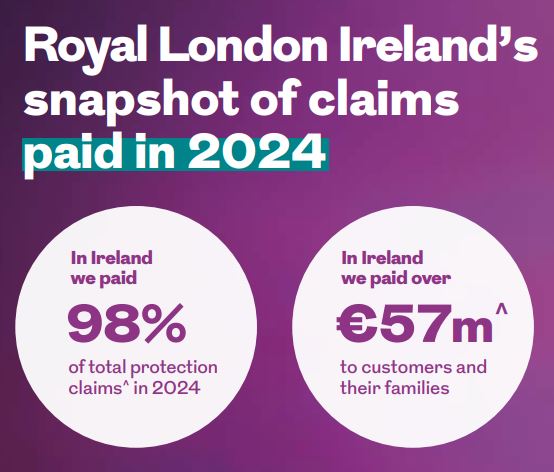
Proof: Irish insurers pay 95–98 % of life claims each year. Refusals usually come from non-disclosure — “forgetting” a medical detail that should’ve been on the form.
Be honest and you’re covered.
Common Myth: “Insurers try to wriggle out of paying.”
They actually hate refusing claims.
Every denial risks bad PR, complaints and a Central Bank audit.
It’s far better business to pay valid claims and promote trust in the system.
Life-Insurance Claims in Ireland: What Happens Next
When a policyholder dies, the family contacts either their broker or the insurer directly.
Insurers must acknowledge the claim within five business days under Central Bank rules.
Once they receive the death certificate and medical report, most Irish companies complete payment within ten working days for a straightforward death claim.
It can be one of the smoothest claims processes in financial services — a tiny bit of paperwork for a life-changing cheque.
What can stall the process is having to wait for Grant of Probate. Here’s how to avoid it:
Take Ann and Barry. Ann is the main earner so takes out a single life insurance policy but doesn’t name Barry on the policy.
When Ann passes, the insurer will require Grant of Probate before they pay out.
If Barry was named as the policy owner, the insurer could pay out immediately.
Main Types of Life Cover (Short Version)
This isn’t a full buyer’s guide — that’s over at Life Insurance Explained — but here’s the overview:
- Term Life Insurance: Cover for a set term (20–30 years). Cheapest and most common.
- Whole of Life: Runs until you die, guaranteed payout, higher cost. Great for legacy or inheritance-tax planning.
- Reviewable Whole of Life: Avoid reviewable policies — premiums rise with age until you cancel in frustration.
Flexibility for the Future
Policies aren’t set in stone. Look for extras like:
- Conversion Option (CO): Extend or take new cover later with no medical questions — huge if your health changes. Here’s how it works.
- Guaranteed Insurability Option (GIO): Increase cover after major life events (marriage, baby, new home) without medicals. See examples.
- Dual vs Joint Cover: Dual pays on each death, Joint only once — dual gives more protection for couples with kids or a mortgage. Compare dual vs joint.
What Affects the Cost?
| Example Cover | Age | Monthly Cost (Non-Smoker) |
|---|---|---|
| €250 k / 20 yrs | 30 | €13–€16 / mo |
| €250 k / 25 yrs | 40 | €21–€25 / mo |
| €250 k / 25 yrs | 50 | €45–€55 / mo |
Premiums depend on age, cover, term, health, and whether you smoke.
Whole-of-life can cost 10–15 × more because a payout is guaranteed no matter when you die.
Where to Buy (And Where Not To)
- Direct from an insurer: One option, no comparison.
- Bank: Tied to a single insurer, so little flexibility.
- Broker: Compares all five major Irish insurers (Aviva, Irish Life, New Ireland, Royal London, Zurich) and matches you to the right one for your health and budget.
Put simply: banks sell; brokers shop. Guess which usually gets you a better deal.
How Brokers Get Paid
We’re paid by the insurer through a standard commission, not by you.
Our duty is still to recommend the policy that best fits your circumstances and budget — we don’t charge extra or favour one provider over another.
It’s a rare case of everyone winning: you get choice, we get paid for doing the legwork.
Where Our Business Went in 2024
We’re the only Irish broker that publishes these figures — because transparency matters.
Here’s how our life and protection business was placed across insurers last year:
| Insurer | % of Total Business (2024) |
|---|---|
| Zurich | 36% |
| Royal London | 34% |
| Aviva | 22% |
| New Ireland | 5% |
| Irish Life | 3% |
| Total | 100% |
Figures based on total life, mortgage protection, and income protection business arranged by Lion.ie in 2024.
It’s proof that we place policies with the right insurer, not just the cheapest one
How Much Cover Do You Need?
A quick rule of thumb: enough to replace your income until your youngest child is financially independent (about 25 years).
(Net monthly income – ½ mortgage) × 0.8 × (25 – age of youngest child) 🧠
Or skip the maths and let me calculate it for you.
You’ll get a personal recommendation based on your family and budget — not Brian from Accounts’ best guess.
Why Honesty Matters
Insurers are fair but not psychic.
If you leave out medical info — a past operation, medication, or smoking habit — it can void a claim.
Tell the truth, even about awkward stuff.
It stays confidential and helps us place you with the right underwriter first time round.
The Real Lesson
When you strip away the jargon, life insurance is simple: you buy peace of mind.
You hope you never use it, but if the worst happens, your family stays afloat instead of drowning in bills.
Get the policy that quietly protects everything you’ve built — not the cheapest, not the flashiest, just the right fit for your family.

Written by Nick McGowan, QFA RPA APA
Nick is a qualified financial advisor and founder of Lion.ie, an independent Irish life insurance and income protection brokerage based in Tullamore.
He’s been helping people get fair, transparent cover for over 15 years — and was named Protection Broker of the Year 2022.
Learn more about Nick