



The investment landscape for the second half of 2026 is defined by a paradox: a world navigating the severe geopolitical shocks of the war in Iran while simultaneously witnessing an unprecedented acceleration in AI infrastructure and the commercialization of space.
The de facto closure of the Strait of Hormuz earlier this year has caused a spike in energy prices around the world, as many countries are already grappling with an affordability crisis. As we enter the second half of the year, these are some of the key themes we continue to monitor.
Macroeconomic overview
Canadian equities: The resource hedge
While .jpg?width=300&height=200&name=GettyImages-2199860896%20(1).jpg) rising costs driven by global volatility and geopolitical tension initially weighed on growth, the energy sector has paradoxically served as a vital economic hedge, with higher prices transforming into a growth engine for the S&P/TSX Index.1
rising costs driven by global volatility and geopolitical tension initially weighed on growth, the energy sector has paradoxically served as a vital economic hedge, with higher prices transforming into a growth engine for the S&P/TSX Index.1
Beyond the energy-driven momentum, the Canadian banking sector has also demonstrated resilience during this period of market volatility, supported by solid internal fundamentals. However, the outlook for banks is tempered by the looming Canada-United States-Mexico Agreement (CUSMA) negotiations slated for July, where potential tariffs or unfavourable deals could dampen domestic economic growth. This pressure is amplified by the fact that Canada has already slipped into a technical recession, leaving the domestic economy vulnerable to further shocks.
The same inflationary pressures and geopolitical conflicts influencing trade and banking have also rippled into the commodities market, causing gold prices to fluctuate as investors price out 2026 rate cuts.
U.S. Equities: Innovation amidst inflation
The U.S. economy is currently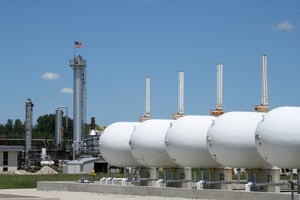 navigating a period of “resilient growth” tempered by a surge in inflation to 4.2% as of May, largely driven by the war in Iran.2 This economic environment, characterized by an affordability crisis, may influence the upcoming November 3 midterm elections, where Democrats currently hold a modest polling advantage.3
Despite these challenges, several sectors provide significant tailwinds for U.S. equities: natural gas exports are projected to grow by 18% this year due to new infrastructure projects,4 and the “space economy” is evolving following the SpaceX IPO and new initiatives for orbital data centres. Furthermore, capital expenditure from hyperscalers—the massive data centre operators that dominate the cloud market, such as Alphabet (Google) and Microsoft—is surging and expected to exceed $800 billion by the end of 2026.5
Global Equities: Divergent recovery
The energy-driven volatility that has affected most countries around the globe has weighed heavily on Europe, where initial growth momentum stalled, leading to downward GDP revisions as high costs dampen consumption and a strong Euro hinders export competitiveness.6
Japan faces similar inflationary headwinds yet the economy is bolstered by record-breaking government spending and structural investments in digitalization and R&D.7
While Japan utilizes government stimulus to offset energy pressures, China is navigating its own internal challenges, specifically a multi-year slump in the residential property market. While we do not have high hopes for a strong rebound, several indicators are pointing to a potential trough. Beyond real estate, China has numerous areas for growth, such as AI, electric vehicles and pharmaceuticals.
Fixed Income: Policy pauses and a shifting credit frontier
The Canadian and U.S. fixed income outlook remains clouded by geopolitical tensions and energy-driven inflation, prompting central banks to maintain data-dependent and balanced policy stances.
 While the Bank of Canada recently held rates at 2.25%, persistent price pressures and significant mortgage renewal risks have led markets to price in potential hikes by year-end, despite government efforts to buffer consumers through federal fuel tax suspensions.
This cautious environment is mirrored in the U.S., where the Federal Reserve has similarly paused rate changes to observe the impacts of a rebounding labour market and inflation that remains firmly above the 2% target. These macroeconomic pressures have introduced volatility into corporate bond spreads, which must now account for both private credit spillover risks and an unprecedented surge in AI-related debt issuance. Ultimately, as market complexities grow, a clear divergence is emerging between high-quality and weaker issuers, making disciplined credit selection essential for navigating high energy prices and tighter access to capital.
These are some of the themes the Empire Life Investments® team will continue to monitor in the second half of the year. In this semi-annual report, we will take a deeper dive into these themes and their impact on markets.
 Download the full Empire Life 2026 Semi-Annual Market Outlook (PDF).
1 Bloomberg, April 27, 2026
2 Bureau of Labor Statistics, “Consumer Price Index Summary”
3 Marist Poll, “A Look to the 2026 Midterms, November 2025”,
4 U.S. Energy Information Administration, “U.S. natural gas exports to grow nearly 30% by 2027 as LNG facilities ramp up”
5 Morgan Stanley Research, “What’s Next In Global Macro”, May 3, 2026
6 European Economic Outlook: Growth Gradually Accelerates Despite Tariff Headwinds, March 3 2026
7 Daiichi Life Research Institute, “Japan Economic Outlook”, March 2026
This document reflects the views of Empire Life as of the date published. The information in this document is for general information purposes only and is not to be construed as providing legal, tax, financial or professional advice. The Empire Life Insurance Company assumes no responsibility for any reliance on or misuse or omissions of the information contained in this document. Please seek professional advice before making any decisions.
Policies are issued by The Empire Life Insurance Company. A description of the key features of the individual variable insurance contract is contained in the Information Folder for the product being considered. Any amount that is allocated to a Segregated Fund is invested at the risk of the contract owner and may increase or decrease in value. Past performance is no guarantee of future performance.
Information contained in this report has been obtained from third party sources believed to be reliable, but accuracy cannot be guaranteed. Empire Life Investments Inc. is the Portfolio Manager of certain Empire Life segregated funds. Empire Life Investments Inc. is a wholly-owned subsidiary of The Empire Life Insurance Company.
June 2026