


10-second summary: Yes, you can often get life insurance or mortgage protection in Ireland after an eating disorder such as anorexia or bulimia. Irish insurers focus heavily on BMI history, stability, relapse risk and psychiatric involvement.
Editor’s Note (2026 update): Eating disorder underwriting in Ireland remains case-by-case. Insurers place significant weight on stability, BMI history and time since last treatment. This article reflects current Irish insurer practice as of 2026.
Yes, in many cases you can.
However, eating disorders are assessed differently from most other mental health conditions, and that’s where people get caught out.
Insurers are not assessing lifestyle choices. They are assessing long-term mortality risk. Certain eating disorders, particularly anorexia nervosa, are associated with higher long-term mortality rates. Because of that, Irish insurers look closely at medical history, stability and relapse risk before offering terms.
If you are currently experiencing symptoms or undergoing treatment, insurers will usually postpone coverage until a 12-month period of stability. If the condition is in the past and you’ve maintained a healthy weight for a sustained period, cover is often possible.
In Ireland, mortgage protection must be in place before drawdown. So if you’ve already been declined and you’re buying a home, it’s important not to waste time applying blindly to more insurers.
Why Have Some Insurers Declined Already?
This is more common than you might think.
Different insurers have very different underwriting tolerances. Some apply automatic declines if there has been recent treatment, hospital admission or very low BMI history. Others will consider cases once there is documented recovery and stability.
That’s why the order you apply in matters.
Submitting to the strictest insurer first can unnecessarily narrow your options.
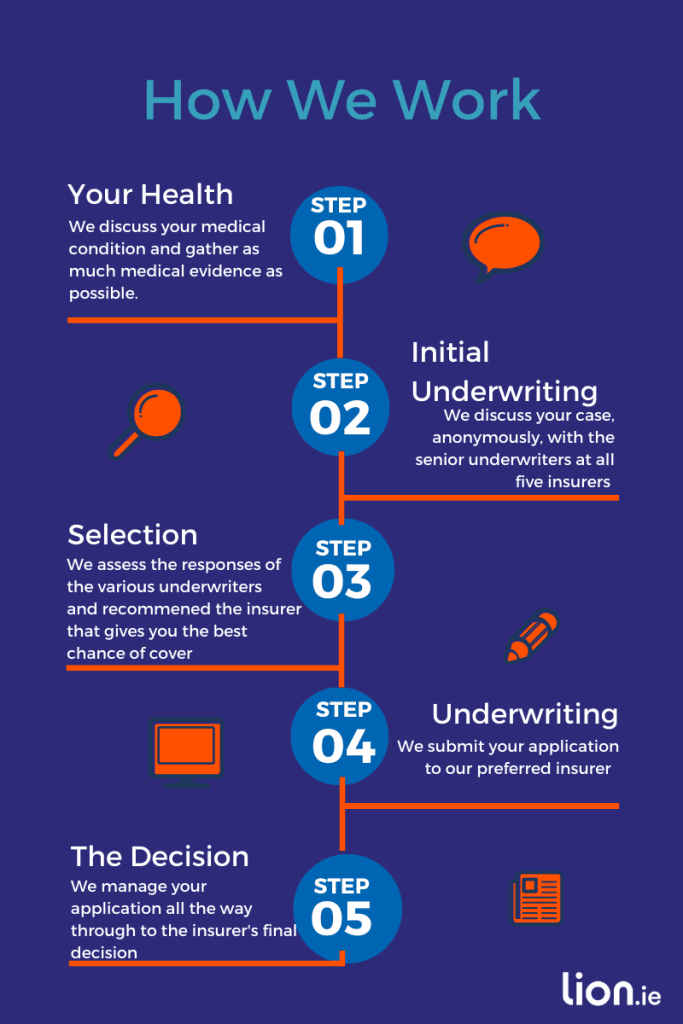
Before any formal application goes in, we speak confidentially to insurers to identify which one is most comfortable with the medical history. That approach protects your position.
What Do Insurers Look At?
Underwriters will usually focus on:
- Type of eating disorder (anorexia, bulimia, binge eating disorder)
- When it began and how long it lasted
- Current height and weight
- Lowest recorded weight
- Duration at a stable, healthy BMI
- Relapses or repeated episodes
- Inpatient admissions
- Psychiatric diagnosis
- Medication history
- Any self-harm history
- The type of cover required (life insurance, mortgage protection, serious illness)
I know it isn’t easy to talk about.
There will be detailed questions because insurers need to understand whether the condition is historical and stable, or whether there remains ongoing risk.
How Much More Expensive Is Life Insurance After an Eating Disorder?
Premium loadings typically range from +100% to +3000% above standard rates, depending on the severity and stability.
In more complex cases, particularly where there were multiple relapses, ongoing psychiatric involvement or serious medical complications, premiums can be higher or cover may be postponed or declined.
Each case is assessed individually so two people with the same diagnosis can receive very different outcomes depending on recovery time and overall stability.
What Improves Your Chances of Getting Accepted?
- At least 12–24 months at a stable, healthy BMI
- No recent relapses
- No hospital admissions. Where there have been inpatient treatments, insurers usually expect a longer period of stability before considering cover. In practice, that often means at least two years since discharge, sometimes longer depending on the circumstances.
- No recent self-harm history
- Discharge from specialist services
- Stable overall mental health
Time and documented stability are the biggest factors because they show the insurer the condition is firmly in the past, not something likely to flare up again.
Mortgage Protection After an Eating Disorder
Mortgage protection is simply life insurance that reduces in line with your mortgage balance. The underwriting process is the same.
Having a past eating disorder does not automatically prevent you from buying a home in Ireland. However, if applications are handled incorrectly, delays and unnecessary declines can complicate the process.
The key is choosing the insurer most aligned with your history before submitting anything formally.
What Should You Do Next?
If you or your partner has a history of an eating disorder and you’ve already been declined, don’t panic.
We deal with complex underwriting cases every day. We approach insurers anonymously first, explain the medical background properly and only submit a full application once we’re confident of the likely outcome.
If you’d like help, complete this questionnaire, and I’ll review your situation in confidence.
If you’d prefer to speak first, you can schedule a callback here.
Nick

Written by Nick McGowan, QFA RPA APA
Nick is a qualified financial advisor and founder of Lion.ie, a multi-agency Irish life insurance and income protection brokerage based in Tullamore.
He’s been helping people secure fair, transparent cover for over 15 years and was named Protection Broker of the Year 2022.
If you’d like straight answers without the sales pitch, learn more about Nick here.