


In 2026, flood insurance pricing is more confusing than ever. Across the country, homeowners are experiencing significant changes in premiums, largely driven by FEMA’s Risk Rating 2.0. For many, the new system feels unclear, unpredictable, and unfair.
This guide breaks it all down for you. We’ll share real pricing data from new flood insurance policies issued over the past year, explain why rates are shifting so dramatically, and show you four proven ways to lower your premium fast.
Why Flood Insurance Prices Feel So Different in 2026
Flood insurance used to be mostly about flood zones. Today, FEMA’s Risk Rating 2.0 evaluates more data points to assign a premium. That includes your home’s replacement cost, elevation, foundation type, distance to water, flood type (riverine vs coastal), and more.
This is why two homes in the same neighborhood, or even on the same street, can have completely different premiums.
Real Pricing Benchmarks From 2026 Policies
We reviewed new flood insurance policies issued through our agency to uncover what homeowners are actually paying.
Typical Homeowner Flood Insurance Premiums by State
| State | # of Policies | Premium Range | Median Premium | Flood Zones Seen |
|---|---|---|---|---|
| Tennessee | 4 | $288 – $741 | $469 | AE |
| Georgia | 4 | $305 – $1,502 | $391 | X, A, AE |
| Alabama | 1 | $700 | $700 | A |
| North Dakota | 1 | $1,861 | $1,861 | AE |
| Virginia | 1 | $923 | $923 | AE |
| Indiana | 1 | $778 | $778 | AE |
| Kentucky | 1 | $808 | $808 | AE |
| Kansas | 1 | $250 | $250 | AE |
| Ohio | 1 | $250 | $250 | AE |
| South Carolina | 1 | $250 | $250 | X |
High-Risk and Outlier Examples
Some properties have significantly higher premiums due to high coastal exposure, elevated replacement costs, or unique structural risks.
| State | Flood Zone | Annual Premium |
| Florida | AE | $4,459 |
| Alabama | VE | $2,851 |
| Wisconsin | AE | $7,306 |
| Louisiana | X | $10,469 |
Why Flood Insurance Rates Increased Again in 2025
If your premium rose last year and is rising again, you’re likely in FEMA’s “glide path” under Risk Rating 2.0. This path gradually increases premiums toward their full-risk rate.
-
FEMA caps annual premium increases at 18%.
-
If your property was historically underpriced, it may keep increasing each year until it reaches your full-risk rate.
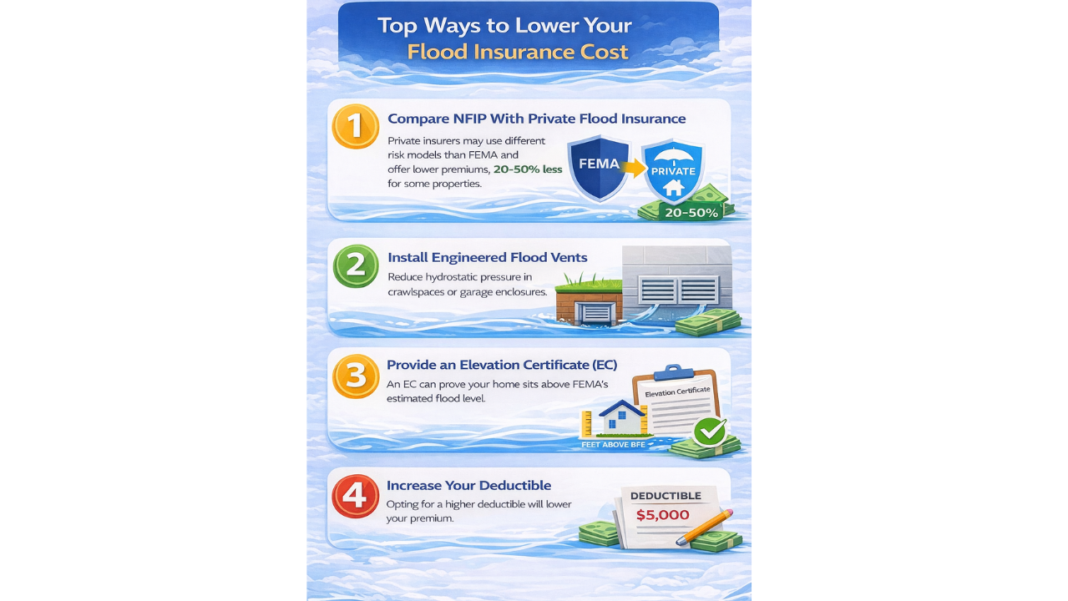
4 Proven Ways to Lower Your Flood Insurance Premium
You can’t move your house, but you can change how FEMA or private carriers perceive your risk. Here are the top strategies that consistently reduce costs:
Frequently Asked Questions
What is the national average cost of flood insurance in 2026?
Typical new policies fall between $250 and $1,500 per year. High-risk or coastal properties may exceed $2,800, and some outliers reach even higher.
Why is my flood insurance going up every year?
You may be on FEMA’s “glide path,” where premiums rise annually until they reflect your full risk profile. Increases are capped at 18% per year.
Can I cancel flood insurance if I’m in Zone X?
If you don’t have a mortgage, usually yes. If you do, your lender may still require coverage. Many homeowners in Zone X keep it voluntarily, since over 20% of flood claims happen outside high-risk zones.
Do I need an elevation certificate in 2026?
It’s optional under RR 2.0, but if FEMA’s estimated elevation is incorrect, an elevation certificate could significantly lower your premium.
What’s the difference between replacement cost and actual cash value?
Replacement cost pays for full repairs or rebuild, while actual cash value subtracts for depreciation. Policies vary by carrier.
You Don’t Have to Guess or Overpay
Flood insurance in 2026 is more complex than ever, but that doesn’t mean you’re stuck.
Whether your rate increased suddenly or you’re just trying to prevent future jumps, comparing your NFIP premium with private market options is the best next move.
At The Flood Insurance Guru, we’ve helped thousands of homeowners across the U.S. understand what’s driving their premium, and what they can do about it. Let’s find out what’s possible for you. No pressure, just real answers.
