


Buying flood insurance can feel overwhelming. Most homeowners focus on one thing: the premium.
While price matters, it is not always the best indicator of whether a flood insurance policy is right for your property. After 15 years in the flood insurance industry, I have seen homeowners save money upfront only to discover coverage gaps, classification errors, or claim issues later.
In this article, you’ll learn the seven questions every homeowner should ask before choosing a flood insurance policy or agent.
Key Takeaways
- Compare both NFIP and private flood insurance options before making a decision.
- The cheapest flood insurance quote is not always the best value.
- Understanding exclusions is just as important as understanding premium costs.
- Annual policy reviews can help prevent coverage gaps and renewal surprises.
Why Asking the Right Questions Matters
Flood insurance policies can vary significantly in coverage, exclusions, pricing, and renewal stability.
A good flood insurance agent should help you understand:
- What is covered
- What is excluded
- How claims work
- What may happen at renewal
- Whether NFIP or private flood insurance is a better fit
1. How Many Flood Insurance Carriers Do You Compare?
Some agents only offer NFIP coverage. Others only represent a single private flood insurance company.
Independent agencies often compare multiple private carriers alongside NFIP options.
Comparing multiple options can help identify differences in:
- Premiums
- Coverage limits
- Exclusions
- Waiting periods
- Claims support
2. How Will This Policy Perform at Renewal?
Many homeowners focus on today’s premium without asking what might happen next year.
Flood insurance rates can change because of:
- Risk Rating 2.0 adjustments
- Property changes
- Flood history
- Carrier underwriting changes
Ask your agent whether the current premium is expected to remain stable and what factors could affect future renewals.
3. What Does This Flood Insurance Policy Not Cover?
This may be the most important question on the list. Every flood insurance policy has exclusions.
Common coverage gaps may include:
- Finished basement improvements
- Additional living expenses
- Pools and outdoor property
- Fences and landscaping
- Detached structures
- Certain contents
- Business-related property use
Understanding what is excluded helps prevent surprises after a flood.
4. Should I Compare NFIP and Private Flood Insurance?
In most situations, yes.
The NFIP remains an excellent option for many homeowners, but private flood insurance may offer:
- Higher coverage limits
- Additional living expenses
- Broader coverage options
- Different deductibles
- Competitive pricing
The best choice depends on your property’s location, flood risk, lender requirements, and replacement cost.
5. How Does Risk Rating 2.0 Affect My Premium?
FEMA’s Risk Rating 2.0 changed how NFIP flood insurance is priced.
Instead of relying primarily on flood zones, FEMA now considers additional property-specific factors, including:
- Distance to water
- Elevation
- Foundation type
- Flood frequency
- Replacement cost
- Prior claims history
This explains why two neighboring homes can have very different flood insurance premiums.
6. What Happens If I Need to File a Flood Insurance Claim?
Before purchasing a policy, ask:
- Who do I contact first?
- How do I document damage?
- How are adjusters assigned?
- What could delay payment?
- What exclusions may affect the claim?
7. Will My Flood Insurance Policy Be Reviewed Every Year?
Flood insurance should never be a “set it and forget it” purchase.
Annual reviews can help verify:
- Coverage limits remain adequate
- Property information is accurate
- Better pricing opportunities exist
- New private flood insurance options are available
- Deductibles still make sense
A yearly review helps ensure your policy continues to meet your needs.
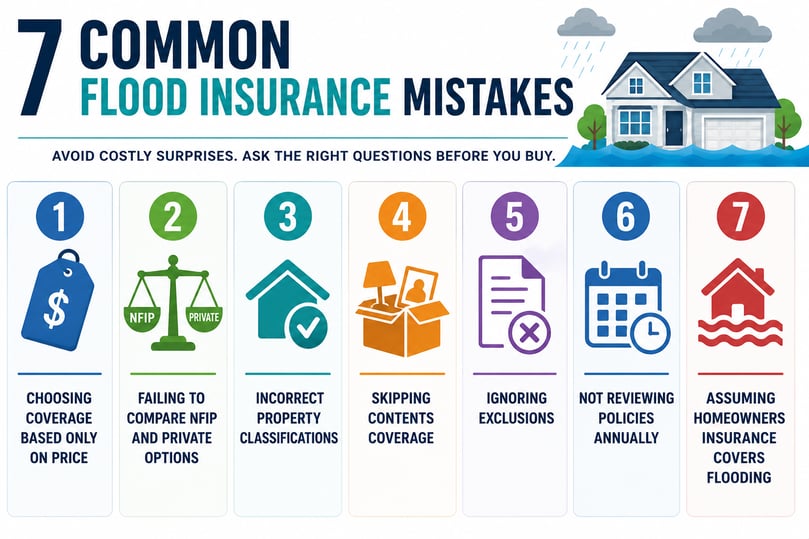
After reviewing thousands of policies, these are some of the most common mistakes I see:
Small mistakes during the quote process can become expensive problems during a claim.
Frequently Asked Questions
Is the cheapest flood insurance policy always the best?
No. A lower premium may come with exclusions, incorrect property classifications, or weaker coverage.
Should I compare NFIP and private flood insurance?
Yes. Comparing both options helps ensure you find the best combination of coverage, pricing, and long-term fit.
Does homeowners insurance cover flood damage?
Generally, no. Standard homeowners insurance policies typically exclude flood damage caused by rising water.
Can flood insurance claims be denied?
Yes. Claims may be denied because of exclusions, documentation issues, coverage limitations, or policy errors.
What Smart Flood Insurance Buyers Do Differently
The difference between a good flood insurance policy and a costly mistake often comes down to asking the right questions before you buy.
Rather than focusing solely on premium, take the time to understand coverage, exclusions, claims handling, renewal expectations, and how your property is classified.
At Flood Insurance Guru, we help homeowners compare flood insurance options side by side so they can make informed decisions based on their property’s actual flood risk. The goal is not simply to find the cheapest policy. It is to find coverage that will perform when you need it most. Click below to access your free NFIP VS. Private Insurance Guide.