

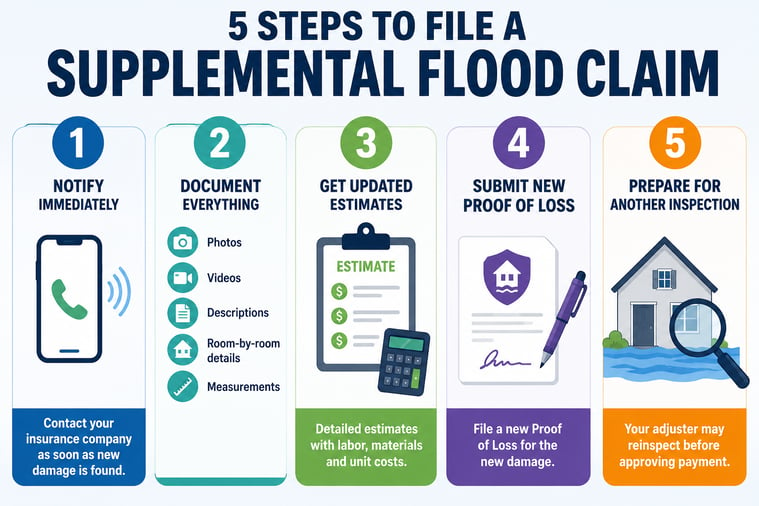

Have you discovered additional flood damage after your original insurance claim was already settled?
If so, you may be able to file a supplemental flood insurance claim.
At Flood Insurance Guru, we regularly help homeowners understand how supplemental flood claims work, what deadlines apply, and how proper documentation can impact the outcome. In this guide, you will learn what a supplemental claim is, when to file one, and how to avoid common mistakes during the process.
What Is a Supplemental Flood Insurance Claim?
A supplemental flood insurance claim is a request for additional payment after your original flood claim has already been processed.
For example, additional damage may appear:
- Behind walls
- Under flooring
- In insulation
- Within structural components
- During demolition or repairs
A supplemental claim helps homeowners recover costs tied to newly discovered flood-related damage.
When Should You File a Supplemental Flood Claim?
Newly Discovered Damage
Flood damage often becomes visible only after cleanup begins.
Examples include:
- Mold growth
- Rotting materials
- Foundation concerns
- Hidden moisture damage
Your Original Payment Was Not Enough
Sometimes repair costs exceed the original insurance estimate.
A supplemental claim may help close the gap if additional covered damage is identified.
Code Upgrade Requirements
In some situations, local building codes require upgrades during repairs, which may create additional costs.
Additional Temporary Living Costs
Certain policies may provide coverage for additional living expenses caused by unexpected repair delays.
The 60-Day Deadline Matters
One of the biggest mistakes homeowners make is missing the supplemental claim deadline.
Under most NFIP flood insurance policies, supplemental claims must generally be filed within 60 days of the original flood loss date, not from the date the damage was discovered.
In federally declared disasters, FEMA may extend deadlines, but extensions are not guaranteed.
Because these timelines matter, homeowners should act quickly when additional flood damage appears.
NFIP vs. Private Flood Insurance Claims
NFIP Flood Insurance
NFIP policies typically involve:
- Strict documentation requirements
- Firm deadlines
- Structured appeals processes
Private Flood Insurance
Private flood insurance may offer:
- More flexible timelines
- Different documentation standards
- Broader claim handling flexibility
Common Supplemental Flood Claim Mistakes
Waiting Too Long
Delays can jeopardize your claim. As soon as new damage is identified, begin documenting it immediately.
Poor Documentation
Insufficient photos, vague estimates, or incomplete records can slow down approval or lead to disputes.
Assuming All Damage Is Automatically Covered
Insurance companies may dispute whether the newly discovered damage was caused directly by flooding. That is why contractor reports and expert opinions can become important.
Not Asking for Professional Help
Complex flood claims may benefit from assistance from:
- Public adjusters
- Structural engineers
- Experienced contractors
- Flood insurance specialists
What if Your Supplemental Claim Is Denied?
If your supplemental flood claim is denied, you may still have options.
Potential next steps may include:
- Negotiating directly with the insurer
- Filing a FEMA appeal
- Requesting appraisal review
- Consulting an attorney
- Filing legal action if necessary
Frequently Asked Questions
What is a supplemental flood insurance claim?
A supplemental flood claim is a request for additional payment after an original flood insurance claim has already been processed.
When should I file a supplemental claim?
You should file one as soon as newly discovered flood damage appears or repair costs increase because of hidden damage.
How long do I have to file a supplemental flood claim?
Under most NFIP policies, supplemental claims generally must be filed within 60 days of the original flood loss date.
Does homeowners insurance cover flood damage?
No. Standard homeowners insurance policies typically exclude flood damage.
Your Next Steps After Discovering Additional Flood Damage
Your Next Steps After Discovering Additional Flood Damage
Flood damage is not always fully visible after the initial inspection. Hidden moisture, structural problems, and repair cost increases often appear later during cleanup and reconstruction.
That is why supplemental flood insurance claims exist.
Homeowners who act quickly, document damage thoroughly, and understand policy deadlines are usually in a much stronger position during the claims process.
At Flood Insurance Guru, we help homeowners understand flood insurance claims, supplemental claim requirements, and coverage options so they can make informed decisions during one of the most stressful parts of flood recovery. Access your Free Flood Claim Guide by clicking below.