

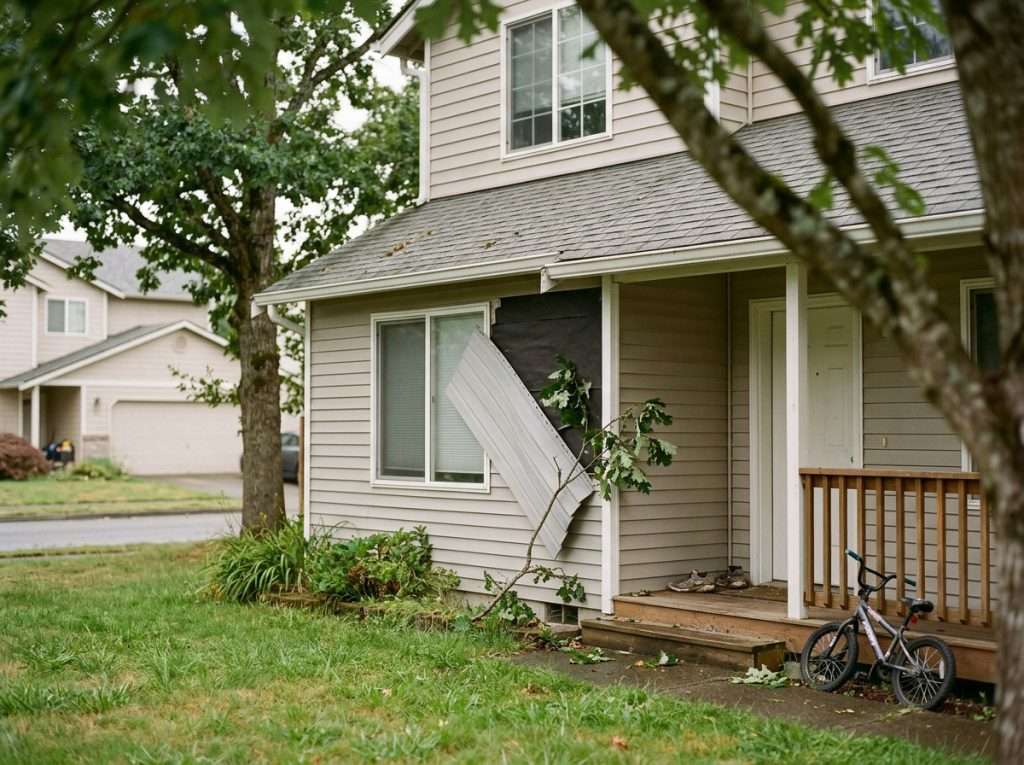

Most homeowners believe their insurance policy covers them for just about anything that goes wrong. That belief gets tested the moment a claim is denied.
A standard homeowners policy is not a comprehensive protection plan. It is a specific contract that covers named risks and excludes many others. The exclusions are not hidden. They are printed in your policy. But most homeowners never read past the declarations page.
The result is a persistent and costly gap between what people expect and what their policy actually delivers. The NAIC’s homeowners insurance consumer guide notes that understanding your policy’s exclusions is just as important as understanding what it covers. Knowing what is not covered is the starting point for building real financial protection.
If you want to understand what your policy does cover before diving into the exclusions, our article on what home insurance actually covers is a good starting point. This article focuses on the gaps.

Flood Damage
Flood damage is the single most common and most costly coverage gap in homeowners insurance. Standard policies do not cover it. This surprises a significant number of homeowners who assume water damage from any source is included.
The distinction matters: your policy likely covers sudden and accidental water damage from inside your home, such as a burst pipe or an overflowing appliance. It does not cover water entering from outside, including storm surge, rising rivers, heavy rainfall, or overland flooding.
According to FEMA, roughly 90 percent of all natural disasters in the United States involve flooding. Yet the vast majority of homeowners have no flood coverage. Flood insurance is available separately through the National Flood Insurance Program or through private insurers, and it is not automatic under any standard homeowners policy.
Even homeowners in low-to-moderate flood risk areas are not necessarily safe. FEMA data shows that more than 25 percent of all flood claims come from properties outside high-risk flood zones. Our article on home insurance and climate risk covers how shifting weather patterns are making this gap more consequential for more homeowners.

Earthquake and Earth Movement
Earthquakes, landslides, mudslides, sinkholes, and other forms of earth movement are excluded from standard homeowners policies across the country.
The reason is financial scale. A significant earthquake can produce tens of thousands of claims simultaneously in a single region. That concentration of loss is too great for standard policy pricing to absorb.
Separate earthquake insurance is available as a standalone policy or as an endorsement in some states. The Insurance Information Institute notes that earthquake policies typically carry higher deductibles than standard homeowners policies, often between 10 and 20 percent of the insured value of the structure.
If you live in a state with elevated seismic activity, this is not an optional consideration. California, Oregon, Washington, Utah, and Nevada all carry meaningful earthquake risk that a standard homeowners policy will not address.
Sewer Backup and Water Seepage
Many homeowners are caught off guard by this one. A standard policy covers sudden and accidental internal water damage. It does not cover water that backs up through a drain or sewer line, or that seeps slowly into a basement from the ground.
Sewer backups can be both sudden and expensive. A blocked municipal line or a collapsed sewer pipe can push sewage directly into a basement, causing significant structural and personal property damage. None of that is covered by default.
Sewer backup coverage is typically available as an endorsement added to your existing homeowners policy for a modest additional premium. If your home has a basement, a sump pump, or sits in an area with aging municipal infrastructure, this endorsement is worth serious consideration.
Slow water seepage, such as groundwater gradually working through foundation walls, is also excluded. Insurers treat gradual damage differently from sudden damage, and coverage almost always requires the loss to be sudden and accidental to qualify.
Normal Wear and Tear and Lack of Maintenance
Insurance is designed to cover unexpected events, not the predictable consequences of time and use. If your roof deteriorates after 25 years, your HVAC system fails because it was never serviced, or your plumbing corrodes gradually, none of those losses are covered.
This exclusion trips up homeowners who delay maintenance and then expect the policy to absorb the consequences. Insurers review claims carefully for evidence of neglect or deferred maintenance, and a history of ignored repairs can result in a denied claim even when the immediate cause of damage appears to be a covered event.
The NAIC’s shopping guide for homeowners insurance emphasizes that homeowners are responsible for keeping their property in good condition as a condition of maintaining valid coverage. Routine maintenance is not optional if you want claims paid.
A useful rule of thumb: if the damage was foreseeable and preventable through regular upkeep, it is likely excluded. If it was sudden, accidental, and caused by an outside force, it is more likely to be covered.
Pest and Rodent Damage
Termites, rodents, bedbugs, and other infestations are universally excluded from standard homeowners policies. Insurers classify pest damage as a maintenance and prevention issue, not an insurable event.
Termite damage alone costs American homeowners an estimated $5 billion annually according to the U.S. Department of Agriculture, and none of it is covered by a standard homeowners policy. The damage can be extensive, particularly to structural wood framing, and it often goes undetected for years.
The only limited exception is when pest activity triggers a separate covered loss. If mice chew through electrical wiring that then causes a fire, the fire damage may be covered under your policy’s fire peril. But the cost of extermination, remediation, or repairing damage caused directly by the pests themselves will not be.
Pest inspections and prevention treatments are the homeowner’s responsibility. This is one area where the exclusion is unlikely to change regardless of insurer or policy type.

Mold
Mold coverage is one of the most nuanced exclusions in a homeowners policy. Whether mold is covered depends entirely on what caused it.
If mold results from a covered event, such as a burst pipe that soaked a wall before the damage was discovered, the mold remediation may be covered as part of that claim. If mold develops because of a slow, undetected leak that was not reported promptly, long-term humidity, or poor ventilation, it is almost certainly excluded as a maintenance issue.
Some insurers offer a mold endorsement that provides limited coverage for mold remediation regardless of cause, typically capped at a specific dollar amount. If your home has a history of moisture issues or if you live in a humid climate, it is worth asking your insurer whether this endorsement is available. The Insurance Information Institute’s overview of homeowners coverage explains the distinction between covered and excluded mold scenarios in more detail.
Home-Based Business Activity
Running a business from your home does not mean your homeowners policy covers it. In most cases, it does not.
Standard homeowners policies cap business property coverage at $2,500 inside the home and provide little to no coverage for business liability. If a client is injured on your property during a business visit, that claim is likely excluded from your personal policy.
This is one of the most common and costly coverage gaps for the growing number of Americans who work from home or operate small businesses from a residential address. Our article on business insurance mistakes small companies make covers this gap in detail, including the options available to close it. The SBA’s insurance guidance for small businesses also outlines what separate coverage home-based business owners should consider.
High-Value Personal Property
Your standard homeowners policy covers personal property, but not always at full value. Most policies apply sub-limits to specific categories of high-value items, regardless of the overall personal property limit on your policy.
Common sub-limits include jewelry, typically capped at $1,000 to $2,500 per item or occurrence, firearms, art, collectibles, furs, and silverware. If you own items in these categories that exceed the sub-limit, you are underinsured for those specific items.
The solution is a scheduled personal property endorsement, sometimes called a floater, that covers specific high-value items for their full appraised value. This requires a professional appraisal for each item and carries an additional premium. As we covered in our article on replacement cost vs. actual cash value, understanding how your policy values property is essential to knowing what you will actually receive after a loss.
Ordinance or Law Compliance
This is one of the most overlooked exclusions in a standard homeowners policy, particularly for owners of older homes.
When a covered loss requires repairs to your home, local building codes may require those repairs to meet current standards, not the standards in place when your home was originally built. Your standard policy will pay to restore your home to its pre-loss condition. It will not pay the additional cost to bring it up to current code.
For example, if a fire damages 60 percent of your home and local code requires a home more than 50 percent damaged to be demolished and rebuilt entirely, your policy covers the 60 percent that was damaged. The cost to demolish and rebuild the remaining 40 percent falls to you unless you carry ordinance or law coverage.
According to United Policyholders, code upgrade requirements have caught many homeowners off guard after major loss events. Ordinance or law coverage is available as an endorsement and is particularly valuable for homes built more than 20 years ago, when electrical, plumbing, energy efficiency, and structural standards were significantly different from today.
Liability From Certain Pools, Trampolines, and Dog Breeds
Certain features on your property and certain pets can create liability exclusions or limitations that many homeowners do not know about until a claim occurs.
Swimming pools and trampolines are considered attractive nuisances under liability law, meaning they are likely to attract children who may not understand the risk. Some insurers exclude or limit liability coverage for injuries involving these features, require safety fencing or netting as a condition of coverage, or charge additional premium to cover them.
Similarly, many standard homeowners policies exclude liability for injuries caused by certain dog breeds, including pit bulls, Rottweilers, German Shepherds, and Chow Chows. If your policy excludes your dog’s breed, any bite or injury claim would not be covered. The NAIC consumer resource on homeowners policiesrecommends reviewing breed-specific and attractive nuisance provisions carefully if these apply to your household.

Why Knowing Your Exclusions Matters Now More Than Ever
The financial stakes of a denied claim have grown significantly in recent years. Rebuilding costs have risen sharply, legal settlements have grown more expensive, and climate-related events are exposing more households to risks they assumed were covered.
Understanding what your policy does not cover is the first step toward making sure you are actually protected. The second step is conducting a regular review. Our guide to how to review your insurance coverage each year walks through a practical process for closing the gaps before a claim, not after. And if you want to understand what happens when coverage is insufficient, our article on what happens if you don’t have enough insurance coverage explains the financial consequences in detail.
The exclusions in your policy are not accidents. They are deliberate boundaries that define the contract you signed. Knowing where those boundaries are is the only way to know whether you need additional coverage to fill the gaps.
Protecting What Your Policy Leaves Out
A homeowners insurance policy is a strong foundation. It is not a complete safety net. Flood, earthquake, sewer backup, business activity, high-value property, and code compliance are all areas where standard coverage falls short of what many homeowners need.
The good news is that most of these gaps can be addressed through endorsements, separate policies, or floaters that are far less expensive than the losses they protect against.
The key is knowing the gaps exist before you need to file a claim. Read your policy, ask your agent about exclusions specific to your property, and take the time to confirm your coverage matches your actual risk. That conversation costs nothing. The alternative can cost everything.
If you are ready to review your current coverage or explore your options, InsuranceHub’s team of advisors is available to help you find the right combination of coverage for your home and household.

Frequently Asked Questions
Does homeowners insurance cover water damage?
It depends on the source. Standard homeowners policies cover sudden and accidental water damage from inside the home, such as a burst pipe or an appliance overflow. They do not cover flooding from outside the home, sewer backup, or slow seepage from groundwater. Separate flood insurance is available through the National Flood Insurance Program or through private carriers.
Are earthquakes covered by homeowners insurance?
No. Earthquake damage and other forms of earth movement are excluded from standard homeowners policies. Separate earthquake insurance is available as a standalone policy or as an endorsement in some states. Deductibles for earthquake policies are typically higher than standard homeowners deductibles.
What personal property exclusions should I know about?
Standard homeowners policies apply per-item or per-category sub-limits to jewelry, art, collectibles, firearms, and electronics. These sub-limits are often far below the actual value of the items. A scheduled personal property endorsement, or floater, can cover specific high-value items for their full appraised value. Our article on replacement cost vs. actual cash value explains how claim payments are calculated and why the coverage type matters.
Does my policy cover damage from a home-based business?
In most cases, no. Standard homeowners policies cap business property coverage at $2,500 and exclude business liability entirely. If you operate any kind of business from your home, you need a separate business owners policy or a specific commercial endorsement. The InsuranceHub business insurance page covers the coverage options available for small and home-based businesses.
What is ordinance or law coverage and do I need it?
Ordinance or law coverage pays the additional cost to bring your home up to current building codes after a covered loss. Standard policies restore your home to its pre-loss condition but do not cover the extra cost of code compliance. It is available as an endorsement and is particularly valuable for homes built before current electrical, plumbing, and structural codes were adopted. The NAIC’s consumer guide to homeowners insurance provides additional detail on common endorsements worth considering.