

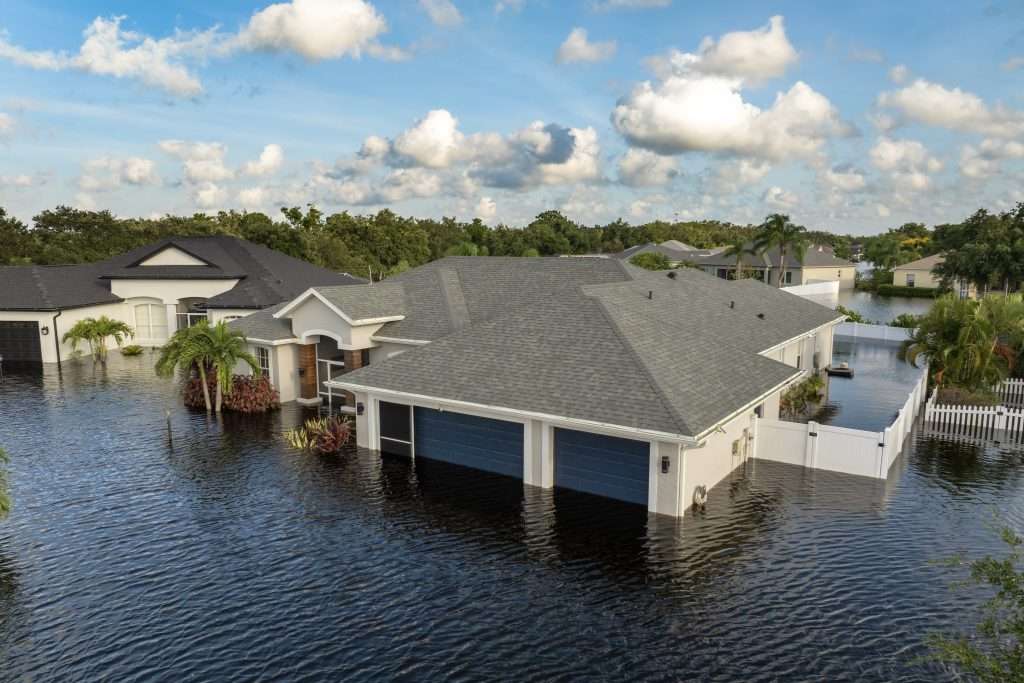

Floods are the most common and most costly natural disaster in the United States, and your homeowners insurance does not cover them.
That gap catches homeowners off guard every single year. A storm rolls through, water enters the home, and the claim is denied because flood damage is a standard exclusion in every homeowners policy in the country. At that point, without a separate flood insurance policy in place, the financial loss is entirely the homeowner’s to absorb.
According to FEMA, flooding is the nation’s most common natural disaster, occurring in all 50 states. Yet the vast majority of homeowners have no flood coverage. Understanding how flood insurance works, what it covers, where to get it, and how claims are paid is the first step toward closing one of the most consequential gaps in residential financial protection.
If you are unsure whether your current homeowners policy leaves you exposed, our article on what homeowners insurance does not cover covers the full list of standard exclusions, including flood damage.

What Is Flood Insurance?
Flood insurance is a separate policy that covers physical damage to your property caused by flooding. It is not part of a standard homeowners, renters, or commercial property policy. It must be purchased independently.
The policy covers two distinct categories: the building itself, including its foundation, electrical and plumbing systems, HVAC equipment, and permanently installed fixtures, and the contents inside the building, including furniture, clothing, electronics, and appliances.
Building coverage and contents coverage are purchased separately. Owning a building policy does not automatically give you contents coverage. If you want both the structure and your belongings protected, you need to elect both at the time of purchase.
The National Flood Insurance Program, commonly called the NFIP, is the primary source of flood insurance for residential properties in the United States. It is administered by FEMA and available through a network of more than 47 private insurance companies. Private flood insurance is also available and growing in availability, with some important differences worth understanding.

What Qualifies as a Flood Under the Policy?
Not every instance of water damage qualifies as a flood under the policy definition. This distinction matters and has significant implications for claims.
The NFIP defines a flood as a general and temporary condition of partial or complete inundation of two or more acres of normally dry land, or two or more properties, at least one of which is the policyholder’s. The source of the flooding must be external, not internal.
Covered flood events include overflow from rivers, lakes, and other bodies of water, storm surge from coastal events, heavy and prolonged rainfall that accumulates faster than the ground can absorb it, mudflow, and erosion caused by flooding. What is not covered is internal water damage such as a burst pipe, a leaking appliance, or a backed-up drain, which fall under homeowners insurance when they qualify as sudden and accidental.
One nuance worth noting: if a flood occurs in the area and a sewer or drain backs up as a result of that flood, the damage may be covered under a flood policy. If the sewer backup occurs independently of a flooding event, it typically requires a separate sewer backup endorsement on your homeowners policy.
NFIP vs. Private Flood Insurance
There are two main sources of flood insurance: the National Flood Insurance Program and the private insurance market. Each has advantages and limitations worth understanding before choosing.
The National Flood Insurance Program (NFIP)
The NFIP is backed by the federal government and is available to any property owner in one of the more than 22,600 participating communities. According to FEMA, the NFIP currently has nearly 4.7 million active policies providing over $1.3 trillion in coverage.
Coverage limits under the NFIP are fixed. For residential properties, the maximum building coverage is $250,000. The maximum contents coverage is $100,000. These limits are the same regardless of which insurance company sells you the policy, because all NFIP policies use the same pricing and coverage structure mandated by FEMA.
The NFIP is the required flood insurance option for homeowners in high-risk flood zones with government-backed mortgages. If your lender requires flood insurance, it can generally be fulfilled through an NFIP policy.
Private Flood Insurance
The private flood insurance market has grown substantially in recent years. Private carriers offer coverage that is not limited by the NFIP’s fixed caps, which makes them an important option for homeowners whose property value or contents exceed NFIP limits.
Private policies can offer building coverage well above $250,000, shorter waiting periods than the NFIP’s standard 30 days, replacement cost value settlements for contents rather than actual cash value, and additional living expense coverage if the home becomes uninhabitable, which the NFIP does not cover.
On the other hand, private insurers can also decline to write coverage in high-risk areas or exit markets entirely after significant losses. Our article on home insurance and climate risk addresses how the private property insurance market is shifting in response to increasing flood risk across the country.
What Flood Insurance Covers
Understanding exactly what is covered under a standard flood policy prevents surprises at claim time. Building coverage and contents coverage each have specific inclusions and exclusions.
Building Coverage Typically Includes:
- The foundation, walls, and structural components of the home
- Electrical and plumbing systems
- HVAC equipment including central air, furnaces, and water heaters
- Permanently installed appliances such as dishwashers and refrigerators
- Permanently installed carpeting over unfinished floors
- Permanently installed paneling, bookcases, and cabinets
- Window blinds
- A detached garage up to 10 percent of the building coverage limit
Contents Coverage Typically Includes:
- Clothing, furniture, and electronics
- Washer and dryer
- Portable and window air conditioners
- Carpets installed over wood floors
- Artwork and furs up to $2,500
What Flood Insurance Does Not Cover:
- Damage to property outside the insured building, including landscaping, decks, patios, and fences
- Vehicles, including cars and boats
- Additional living expenses if you are temporarily displaced from the home
- Basement contents in most circumstances under NFIP policies
- Currency, precious metals, and financial documents
- Business interruption losses
Understanding these exclusions is important for setting the right coverage expectations. If you need additional living expense coverage during a flood displacement, that typically requires either a private flood policy or a separate provision in your homeowners policy. Our article on what happens if you don’t have enough insurance coverage addresses the financial consequences of coverage gaps in detail.

The 30-Day Waiting Period
One of the most important practical facts about flood insurance is the waiting period. You cannot buy a flood policy the day before a storm and expect it to cover the damage.
NFIP policies have a standard 30-day waiting period from the date of purchase before coverage takes effect. This means that if you apply for flood insurance on May 1, your coverage does not begin until May 31. According to FEMA’s flood insurance guidance, there are limited exceptions to this waiting period.
The waiting period is waived when flood insurance is purchased as a requirement of a mortgage at closing or refinancing. It is reduced to one day when a property is newly designated as a high-risk flood zone and the owner purchases a policy within 12 months of the map change. It may also be waived within 60 days of wildfire containment on federal land, as post-fire flooding risk increases significantly.
Private flood insurance policies typically carry a shorter waiting period, often between 10 and 14 days, though this varies by carrier and state.
The practical implication is clear: flood insurance cannot be purchased reactively. By the time a flood is forecast, it is too late to buy coverage that will respond to that event. Purchasing a policy requires planning ahead, ideally well before the storm season most relevant to your region.
How Flood Insurance Claims Are Paid
Understanding how claims are settled helps homeowners know what to expect and how to document losses effectively.
After a flood event, the first step is to contact your flood insurer as quickly as possible. The insurer will assign an adjuster who will inspect the property and document the damage. Under NFIP policies, adjusters follow standardized damage assessment protocols established by FEMA.
NFIP building coverage is typically settled on a replacement cost value basis for primary residences that are insured to at least 80 percent of the building’s full replacement value. Contents coverage is generally settled on an actual cash value basis, meaning depreciation is applied. The difference between replacement cost and actual cash value can be significant, particularly for older personal property. Our article on replacement cost vs. actual cash value explains how these two settlement methods work and why it matters for your claim.
Documentation is critical. Before cleanup begins, photograph and video all flood damage to the building and its contents. Make a list of all damaged personal property with estimated values, purchase dates, and any receipts or appraisals you have. Retain all damaged items until the adjuster completes the inspection.
If you disagree with the settlement offered, NFIP policyholders have the right to appeal. The appeal must be submitted to FEMA in writing and is subject to a one-year statute of limitations from the date the insurer first denied or underpaid the claim.
Who Needs Flood Insurance?
The common assumption is that only homeowners in high-risk flood zones need flood insurance. That assumption is demonstrably wrong.
According to FEMA’s flood insurance data, more than 25 percent of all NFIP flood claims come from properties located outside designated high-risk flood zones. Flooding is not confined to floodplains. It happens in areas with poor drainage, after heavy rainfall, following rapid snowmelt, and in neighborhoods where development has altered natural water flow.
The NFIP notes that just one inch of water in a home can cause approximately $25,000 in damage. For most households, that is not an amount that can be absorbed without significant financial disruption.
Flood insurance is required for homeowners in FEMA-designated Special Flood Hazard Areas with government-backed mortgages. For everyone else, it is optional. But optional is not the same as unnecessary.
If your home is in a low-to-moderate risk area and you are considering flood coverage, reviewing your options as part of your annual insurance review is the right approach. Our guide to how to review your insurance coverage each year includes flood insurance as a specific area of consideration for homeowners.
How Much Does Flood Insurance Cost?
Flood insurance premiums vary based on the property’s flood risk, the coverage amounts selected, the deductible chosen, and the age and elevation of the structure.
The NFIP implemented a new pricing methodology called Risk Rating 2.0 in 2021, which moved away from flood zone maps as the primary pricing factor and toward property-specific risk data. Under this system, each property is assessed individually based on its flood risk, replacement cost, and the distance and elevation relative to flood sources.
The result is that flood insurance premiums can vary significantly from one property to the next, even within the same neighborhood. Some properties saw premium reductions under Risk Rating 2.0 while others saw significant increases.
For private flood insurance, pricing is set by the individual carrier based on their own risk models. In some areas, particularly lower-risk zones, private carriers can offer competitive pricing relative to the NFIP. In high-risk coastal or flood-prone areas, the NFIP may offer more stable pricing or be the only available option.
To get a personalized estimate, homeowners can use the NFIP’s online quote tool at FloodSmart.gov, or speak with an independent insurance advisor who can compare NFIP and private options for your specific property.

Why Flood Coverage Is More Important Today Than It Has Ever Been
Climate patterns are shifting, and flood risk is expanding geographically. Areas that historically experienced infrequent flooding are now seeing more frequent and more severe flood events.
The U.S. Treasury’s analysis on climate and insurance markets has identified the growing gap between flood risk and flood coverage as a systemic financial vulnerability for American households. As flood risk increases and private insurers selectively reduce exposure in high-risk markets, the consequences of being uninsured become more severe.
Flood insurance is not a product to evaluate only after a warning. It requires a 30-day waiting period, which means coverage must be in place before the risk materializes. For most households, the cost of a flood policy is significantly less than the potential cost of even a moderate flood event.
What to Do Next
Flood insurance is straightforward in concept. The complexity lies in choosing the right coverage amount, selecting between NFIP and private options, and understanding what is and is not covered under the policy you select.
The first step is finding out whether your property is in a designated flood zone, which affects both your coverage requirement and your pricing. The second step is determining whether your NFIP coverage limits are sufficient, or whether a private policy offering higher limits is a better fit. The third step is making sure building and contents are both covered, not just the structure.
If you are ready to explore your flood insurance options or want help determining the right coverage for your property, InsuranceHub’s advisors can help you navigate both NFIP and private market options. You can also review your overall homeowners coverage to identify other gaps by visiting our homeowners insurance page.
Frequently Asked Questions
Does homeowners insurance cover flooding?
No. Flood damage is a standard exclusion in every homeowners insurance policy in the United States. A separate flood insurance policy is required to cover damage caused by flooding. Flood coverage is available through the National Flood Insurance Program or through private flood insurers.
How long does it take for flood insurance to go into effect?
NFIP flood insurance policies have a standard 30-day waiting period from the date of purchase. Coverage does not begin until 30 days after the application and payment are received. Exceptions apply when coverage is purchased as a mortgage requirement, when a property is newly designated in a high-risk flood zone, or in certain post-wildfire situations. Private flood insurance often carries a shorter waiting period of 10 to 14 days.
What is the maximum coverage available through the NFIP?
The NFIP provides a maximum of $250,000 in building coverage for residential properties and $100,000 in contents coverage. These limits are fixed and apply regardless of which insurance company sells you the policy. Homeowners who need coverage above these limits must purchase a private flood insurance policy to supplement or replace NFIP coverage.
Do I need flood insurance if I am not in a high-risk flood zone?
Not by legal requirement, unless your mortgage lender mandates it. However, more than 25 percent of all flood insurance claims come from properties outside high-risk flood zones. Flooding can happen anywhere it rains. Homeowners outside high-risk areas are still exposed to financial loss from flooding, and a flood policy remains available to them through the NFIP or private market. Our article on home insurance and climate risk explains why flood risk is growing beyond traditionally high-risk areas.
What is the difference between NFIP and private flood insurance?
NFIP policies are backed by the federal government, carry fixed coverage limits ($250,000 building and $100,000 contents), and are available in any participating community. Private flood insurance policies are issued by private carriers, can offer higher coverage limits, may carry shorter waiting periods, and sometimes include additional features like loss of use coverage not available through the NFIP. Pricing and availability vary by carrier and region.