


If your flood insurance premium has increased dramatically, you are probably frustrated, confused, and wondering what changed. Many homeowners assume flood insurance pricing is based only on whether they live in a high-risk flood zone. Unfortunately, that is no longer the case.
Today, flood insurance pricing is far more complex, especially under FEMA’s Risk Rating 2.0 system. Factors like your home’s elevation, foundation type, claims history, and even how close you are to water can all impact what you pay.
In this article, you will learn the five hidden factors driving flood insurance costs and what you can do to protect both your home and your wallet.
1. FEMA’s Risk Rating 2.0 Changed How Flood Insurance Is Calculated
Risk Rating 2.0 uses a property’s unique flood risk to calculate premiums, not just the flood zone designation.
This updated pricing system looks at multiple factors, including:
- Distance to nearby water sources
- Type of flooding risk
- Frequency of flooding in the area
- Elevation of the structure
- Cost to rebuild the home
- Historical flood data
For many homeowners, especially in inland areas that never expected major increases, premiums rose significantly.
While FEMA limits annual increases for primary residences to 18%, those increases can compound over time and lead to premiums doubling or tripling within a few years.
Why This Matters for Homeowners
Two homes in the same flood zone can now have drastically different premiums because their individual risks are different.
That means your neighbor could pay far less than you, even if your homes are located on the same street.
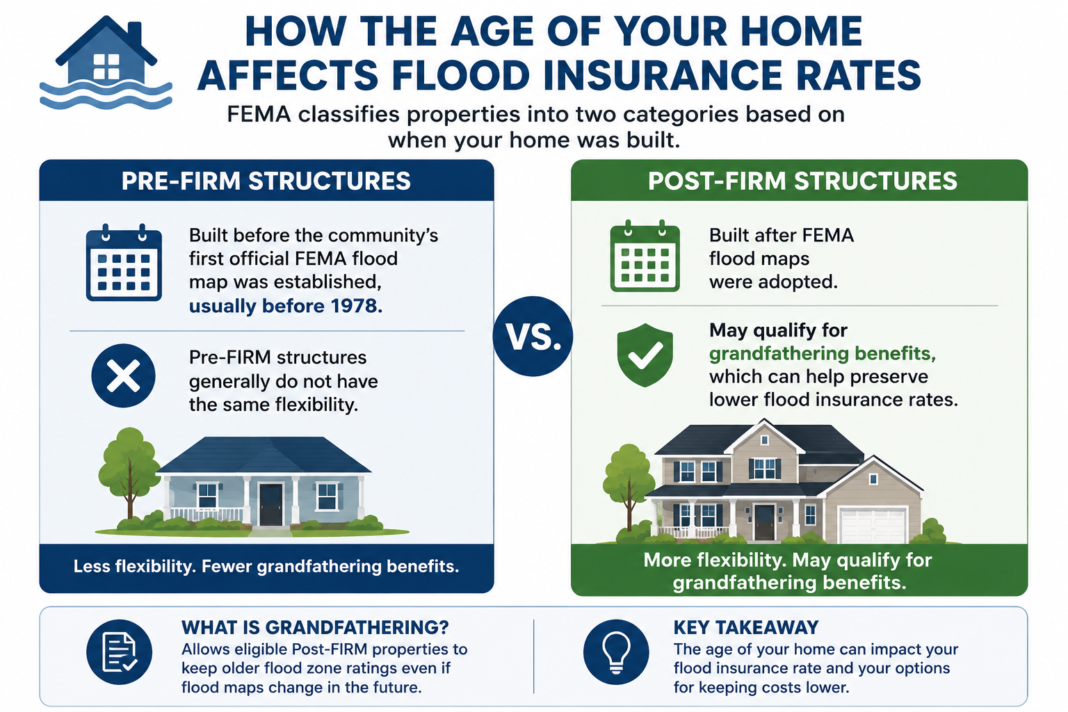
2. The Age of Your Home Impacts Flood Insurance Rates
Why Older Homes Often Cost More to Insure
Older homes may:
- Sit lower than modern building standards require
- Lack flood mitigation features
- Have outdated construction methods
- Face greater flood exposure
3. Your Foundation Type Can Significantly Raise Premiums
Crawlspaces Above Grade vs. Below Grade
An above-grade crawlspace sits above the surrounding ground level.
A subgrade crawlspace sits partially below ground.
Subgrade crawlspaces often lead to higher premiums because they increase the risk of floodwater entering the structure.
Above-grade crawlspaces may qualify for lower rates, especially when they include proper flood vents.
How Basements Affect Flood Insurance
Basements can dramatically increase flood insurance costs because they are typically located below the lowest adjacent grade.
This creates what is known as a negative elevation.
The lower the basement sits relative to the Base Flood Elevation (BFE), the higher the flood risk becomes.
In some situations, flood insurance premiums can exceed $10,000 annually for non-coastal properties with severe negative elevations.
Why Foundation Design Matters
Foundation type affects:
- Floodwater entry risk
- Structural vulnerability
- Elevation calculations
- Eligibility for private flood insurance
Before buying a home, especially one with a basement, it is important to understand how the foundation could impact future flood insurance costs.
4. Elevation Is One of the Biggest Pricing Factors
Your home’s elevation relative to the Base Flood Elevation is one of the most important parts of flood insurance pricing.
The only reliable way to determine this is through an Elevation Certificate or property survey.
Positive Elevation vs. Negative Elevation
Positive Elevation
A positive elevation means your home sits above the Base Flood Elevation.
The higher your home sits above the Base Flood Elevation, the lower your flood insurance premium is likely to be.
Some homes with strong elevation advantages may even qualify for a Letter of Map Amendment (LOMA), which can potentially remove the mandatory flood insurance requirement altogether.
Negative Elevation
A negative elevation means portions of the home sit below the Base Flood Elevation.
Negative elevations increase flood probability and can create major pricing challenges.
Why Negative Elevation Creates Problems
Homes with severe negative elevations may face:
- Extremely high NFIP premiums
- Fewer private insurance options
- Lower property values
- Greater flood exposure
Private flood insurance carriers are often hesitant to insure homes with substantial negative elevations.
5. Flood Claims History Can Impact Future Insurance Costs
Flood losses can follow a property for years. Even a single paid flood claim can impact future insurance availability and pricing.
The Impact of One Flood Claim
After one flood loss:
- Preferred NFIP rates may disappear
- Some private flood insurers may decline coverage
- Future premiums may increase
The Impact of Multiple Flood Claims
The second paid flood loss can be even more serious.
Multiple flood claims can classify a property as a Severe Repetitive Loss property, creating stricter insurance requirements and fewer coverage options.
Can You Lower Expensive Flood Insurance?
Potential strategies:
- Obtaining an Elevation Certificate
- Installing flood vents
- Exploring private flood insurance options
- Elevating utilities and equipment
- Applying for a Letter of Map Amendment
- Improving drainage around the property
Frequently Asked Questions
Why did my flood insurance premium suddenly increase?
Flood insurance premiums often increase because of Risk Rating 2.0, flood map changes, elevation issues, or prior flood claims. FEMA now evaluates each property’s unique flood risk instead of relying only on flood zones.
Is private flood insurance cheaper than FEMA flood insurance?
In many cases, yes. Private flood insurance can sometimes offer lower premiums and broader coverage than the National Flood Insurance Program, especially for lower-risk homes or properties with favorable elevations.
Does an Elevation Certificate always reduce flood insurance costs?
No. An Elevation Certificate only helps if it shows your property sits higher than FEMA estimates. In some cases, it could reveal higher flood risk and increase premiums.
Why are basements so expensive to insure for flooding?
Basements are highly vulnerable to flood damage because they sit below ground level. This increases the likelihood of water intrusion and creates higher flood insurance risk.
Moving Forward
Many homeowners are seeing major premium increases due to Risk Rating 2.0, elevation challenges, foundation issues, and flood claim history.
The good news is that understanding these hidden factors puts you in a stronger position to make informed decisions.
At Flood Insurance Guru, we help homeowners understand their flood risk, compare coverage options, and find solutions that fit their situation. Click below to get a free policy review on your current flood insurance policy and let us help you determine whether your property qualifies for lower cost alternatives or mitigation discounts.
