

Navigating the world of long-term disability (LTD) benefits can feel overwhelming, especially when you are already dealing with a serious medical condition. If your symptoms are preventing you from working, understanding how to get long-term disability benefits is essential to protecting your income and financial stability.
Long-term disability benefits are designed to replace a portion of your income when a medical condition prevents you from performing the duties of your occupation. However, approval is not automatic. The process can be complex, and insurance companies often require detailed proof that your condition truly limits your ability to work.
Most policies require more than just a diagnosis. You must show, through medical evidence and documentation, how your symptoms restrict your functional abilities and prevent you from reliably performing your job. Gathering strong medical records, physician support, and clear documentation of your limitations is one of the most important steps in building a successful claim.
It is also critical to understand the specific terms of your disability insurance policy. Each policy defines disability differently and may include deadlines, exclusions, or limitations that affect your eligibility. Knowing what your policy requires can help you avoid common mistakes that lead to delays or denials.
Many claimants wonder whether they need an attorney to file for long-term disability benefits. In most cases, claims must first go through the insurance company’s application and review process. While legal representation is often most helpful after a denial, there are still important steps you can take early on to strengthen your claim and avoid preventable problems.
This guide will walk you through how to get long-term disability benefits, what insurance companies look for, and how to position your claim for the strongest possible outcome.
What Are Long-Term Disability Benefits?
Long-term disability (LTD) benefits offer financial support to individuals who can’t work due to illness or injury. These benefits often cover a portion of your salary, typically between 50% to 70%. This allows you to maintain some financial stability during your recovery.
LTD benefits are designed to provide sustained assistance when a medical condition prevents you from earning your usual income. Unlike short-term disability coverage, LTD benefits kick in after a longer waiting period and can last for several years or until you reach retirement age.
Understanding the details of LTD benefits is crucial. Key aspects to know include:
- Coverage Amount: How much of your salary is covered.
- Waiting Period: The time before benefits begin.
- Benefit Duration: How long benefits last.
- Exclusions: Any conditions or situations not covered.
Access to LTD benefits can provide peace of mind. They ensure that your financial needs are met even when you face unexpected health challenges. Exploring these options thoroughly can help safeguard your financial future.
Who Qualifies for Long-Term Disability?
Qualifying for long-term disability benefits requires meeting specific criteria. The primary requirement is a medical condition that severely restricts your ability to work. Each policy defines “disability” differently, making it important to understand your specific policy.
Most insurers require that your condition prevents you from performing not just your current job, but any job for which you may be qualified. This can present a challenge for some claimants. Your healthcare provider plays a crucial role in certifying your disability status. Detailed medical records and supporting documentation are vital to prove your condition.
Additionally, policies may have specific exclusion periods, known as “elimination periods,” during which you must be unable to work before receiving benefits. These periods often last between 90 to 180 days.
To ensure eligibility, consider these steps:
- Consult Your Doctor: Regular visits for updated medical records.
- Understand Policy Terms: Check definitions and coverage specifics.
- Collect Evidence: Gather comprehensive documentation.
Anyone considering applying for LTD should carefully review their policy details and consult their healthcare provider. Understanding these factors can improve your chances of qualifying for benefits and securing the financial support you need.
Common Medical Conditions That Qualify
Various medical conditions can qualify you for long-term disability benefits. The severity of the condition, rather than the type, often dictates eligibility. Common conditions include chronic illnesses, severe injuries, and mental disorders.
Qualifying conditions frequently include:
- Musculoskeletal Disorders: E.g., chronic back pain, arthritis.
- Cardiovascular Issues: E.g., heart disease, stroke.
- Neurological Disorders: E.g., Parkinson’s disease, multiple sclerosis.
- Mental Health Conditions: E.g., severe depression, anxiety disorders.
Each insurer’s criteria can differ, so familiarize yourself with your policy. Documentation should thoroughly explain how the condition limits your work capabilities. Clear, comprehensive medical records are essential to support your claim and help ensure you meet the requirements for benefits.
Understanding Your Disability Insurance Policy
Understanding your disability insurance policy is vital in the process of applying for long-term disability benefits. Each policy contains specific clauses and definitions that determine your coverage and eligibility. It’s crucial to know these details before you apply.
Your policy might differentiate between “own occupation” and “any occupation.” An “own occupation” policy provides benefits if you’re unable to work in your specific job. Conversely, an “any occupation” policy requires you to be unable to work in any capacity. Knowing this distinction helps set clear expectations for your claim.
Policies may also include certain exclusions and limitations, such as pre-existing conditions or mental health coverage caps. Another key aspect is the waiting period or “elimination period,” which is the time you must be disabled before benefits begin.
To thoroughly understand your policy, consider these steps:
- Read Policy Documents: Look for key terms and definitions.
- Contact Customer Service: Seek clarifications and ask questions.
- Consult Professionals: Get advice from an attorney for complex terms.
Understanding these aspects can greatly influence the success of your disability claim.
How to Apply for Long-Term Disability Benefits
Applying for long-term disability benefits involves a multi-step process. Each step demands attention and thorough documentation to succeed. Ensuring accuracy can prevent delays and denials.
Beginning with a comprehensive review of your insurance policy is crucial. Know the terms, conditions, and any potential exclusions. This knowledge will form the foundation of a successful application process.
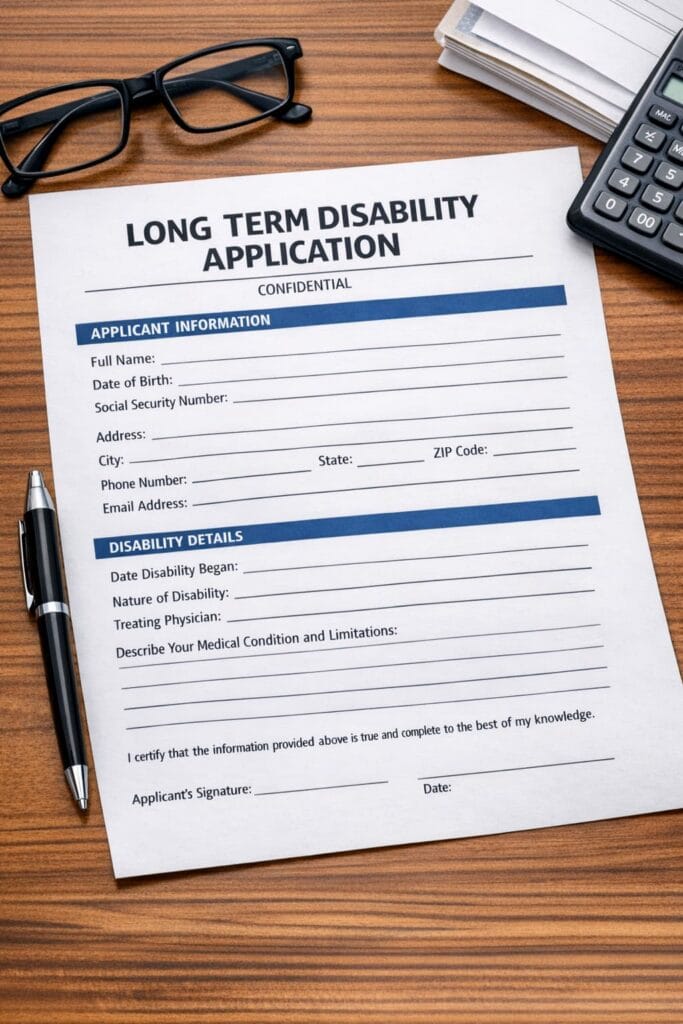
Next, complete the required application forms diligently. These forms collect personal and job-related information. Take your time to provide thorough and precise details.
Medical evidence plays a significant role in supporting your application. Collect and submit all necessary medical records and documentation. These prove your inability to perform job duties and solidify your claim.
Communication is key when dealing with your employer and insurer. Maintain regular contact and keep them informed of any updates. Timely responses demonstrate your commitment and transparency.
Lastly, following up on your claim status is essential. Regularly check for updates and respond promptly to any additional requests. This proactive approach can expedite the evaluation process.
Consider these steps to streamline your application:
- Begin Early: Start the application process as soon as possible.
- Keep Records: Maintain copies of all documents submitted.
- Seek Support: If needed, consult professionals for guidance.
These steps can enhance your chances of securing long-term disability benefits.
Step 1: Review Your Policy and Gather Documentation
Before applying, understanding your policy is vital. Study the coverage specifics, benefits, and any potential waiting periods. This step ensures your expectations align with reality.
Collect essential documentation beforehand. This documentation includes:
- Employment Details: Job description and employment history.
- Medical Records: Diagnoses, treatments, and specialist reports.
- Policy Copy: Your insurance policy and any amendments.
Having these documents ready facilitates a smoother application process.
Step 2: Complete the Application Forms
Completing the application forms is a detailed task. These forms require comprehensive information about your medical condition and employment history. Accuracy is crucial in this step.
Pay special attention to every section of the form. Fill each section with clarity and precision to avoid confusion. Provide supporting documents wherever applicable.
Here’s how to approach it:
- Read Thoroughly: Understand each question before answering.
- Be Honest: Provide truthful and transparent information.
- Double-Check: Review your answers for errors or omissions.
Taking time with your forms can prevent future complications.
Step 3: Submit Medical Evidence and Records
Medical evidence is the backbone of your disability application. It validates your claim that you are unable to work. Submit comprehensive medical documentation to support your case.
Your medical records should include:
- Doctor’s Notes: Clearly stating your diagnosis and treatment.
- Test Results: Lab and imaging results relevant to your condition.
- Ongoing Treatments: Current therapies and future medical plans.
These records substantiate your inability to perform job duties, strengthening your application.
Step 4: Communicate with Your Employer and Insurer
Effective communication with your employer and insurer is crucial. They must understand your situation fully to support your claim. Keep them informed about your progress and any changes.
Regular updates can prevent misunderstandings and delays. They ensure all parties are aligned and aware of your circumstances. This open line of communication can ease the overall process.
RELATED POST: Communicating with Long-Term Disability Insurance Adjusters
Step 5: Follow Up and Respond to Requests
Following up on your application status is essential. Monitor progress and respond swiftly to any additional requests. Prompt responses can move your application along faster.
Neglecting this step may lead to unnecessary delays. Be proactive and patient as you manage your claim. It reflects your commitment and responsibility towards obtaining benefits.
What to Do If Your Claim Is Denied
Receiving a denial for your long-term disability claim can be discouraging. However, it’s important to remember that this is not the end of the road. Many claims are initially denied and can be appealed successfully.
The first step is to carefully review the denial letter. Understand the reasons given for the denial. This insight helps tailor your response and plan your next moves strategically.
Before proceeding, gather additional evidence or documentation to support your case. Focus on addressing the specific reasons for denial highlighted in the letter. Strengthening your claim with thorough and detailed information can be beneficial.
Consider the following actions for a robust appeal:
- Consult Experts: Seek advice from a disability attorney or advocate.
- Gather Evidence: Compile new or additional medical records and statements.
- Submit Appeal Timely: File your appeal within the deadlines specified.
The appeal process requires patience and diligence. Legal expertise can be advantageous, so consider consulting a long-term disability attorney to help navigate this challenging period.
The Role of a Long-Term Disability Attorney
Navigating the complexities of long-term disability claims often requires expertise. A long-term disability attorney plays a crucial role in this process. They bring a wealth of knowledge about insurance policies and legal procedures.
One of their primary functions is to interpret the complicated language of your insurance policy. Understanding terms and conditions can be overwhelming for the uninitiated. An attorney provides clarity and ensures you understand your rights and obligations.
In addition, if your claim has been denied, an attorney can represent you during the appeals process. Their expertise improves the chances of a favorable outcome. Legal support can make a significant difference in such situations.
Here’s how a long-term disability attorney can assist you:
- Evaluate your claim to determine its strengths and weaknesses.
- Communicate with insurers to negotiate and advocate on your behalf.
- Assist with gathering evidence and preparing documentation.
- Represent you in legal proceedings if necessary.
Hiring an attorney can offer peace of mind, knowing you have a professional advocating for your best interests. Their guidance is invaluable in maneuvering through the legal maze of disability claims.
Tips for a Successful Long-Term Disability Claim
Filing a successful disability claim requires preparation. Start by keeping meticulous records of your medical condition. Detailed documentation is essential to substantiate your claim.
Understanding the nuances of your insurance policy can significantly impact your claim. Familiarize yourself with specific terms and conditions. This insight helps prevent common pitfalls and mistakes.
Working closely with healthcare providers is also crucial. Clear communication ensures they provide timely and accurate medical reports. These reports are vital evidence for your claim.
Here are some tips to increase your chances of a successful claim:
- Stay organized by maintaining updated files and records.
- Meet all deadlines to avoid automatic denials.
- Be truthful and consistent in all your forms and communications.
- Seek professional guidance if you face complexities.
Implementing these strategies can enhance your claim’s credibility and streamline the application process.
Frequently Asked Questions About How to Qualify for Disability
Are long-term disability benefits taxable?
Long-term disability benefits may be taxable depending on how the insurance premiums were paid. If your employer paid the premiums, benefits are often taxable. If you paid the premiums yourself with after-tax dollars, benefits are usually not taxable. Review your policy or speak with a tax professional to understand your specific situation.
Do long-term disability policies exclude pre-existing conditions?
Many long-term disability policies include pre-existing condition exclusions. This typically means a condition may not be covered if you received treatment, medication, or care for it during a specified look-back period before your coverage began. The exact language and timeframes vary by policy.
How long does it take to get approved for long-term disability benefits?
The timeline varies depending on the insurance company and the complexity of your claim. After you submit your application and complete any elimination period required by the policy, the review process can take several weeks or months. Delays are common if additional medical documentation or clarification is requested.
What is the elimination period for long-term disability benefits?
The elimination period is the waiting period between the date you become disabled and the date benefits begin. Most policies have elimination periods ranging from 90 to 180 days, though some may be shorter or longer. You must remain disabled throughout this period to qualify for benefits.
Can I work part-time while receiving long-term disability benefits?
Some policies allow limited or part-time work while receiving benefits, often referred to as residual or partial disability benefits. However, working can also affect your eligibility depending on how your policy defines disability and how much you earn. Always review your policy carefully before returning to any form of work.
How is long-term disability different from Social Security Disability Insurance (SSDI)?
Long-term disability insurance is typically a private or employer-sponsored benefit, while Social Security Disability Insurance (SSDI) is a federal program. Each has its own definition of disability, application process, and eligibility requirements. It is possible to qualify for both, but approval for one does not guarantee approval for the other.
Protecting Your Financial Future
Securing long-term disability benefits is critical when a medical condition prevents you from working. These benefits can provide essential financial stability, but approval often depends on how well your claim is prepared from the start. Understanding your policy, documenting your functional limitations, and submitting strong medical support can significantly improve your chances of success.
While many people assume they need an attorney to file their initial claim, most long-term disability claims must go through the insurance company’s process first. Our firm typically becomes involved after a claim has been denied or benefits have been terminated. However, that does not mean you have to navigate the process alone.
We offer a variety of free resources to help you build a stronger claim from the beginning, including guides, a free eBook, and tools designed to help you document your symptoms, treatment, and work limitations. These resources are the same types of materials we use to help our own clients develop persuasive disability claims.
Being proactive and informed can reduce stress and help protect your financial future. Use the resources available to you, stay engaged in your medical care, and take steps now to build the strongest claim possible. If your claim is denied, you will be in a much better position to appeal and protect the benefits you deserve.