


When you purchase through links on our site, we may earn a commission. Here’s how it works.
Take a quick look around your house.
The dirty laundry on the floor. The kitchen trash can. The pack of gum left on the coffee table.
To your dog, these aren’t everyday household items. They’re opportunities for snacks.
And some of those “snacks” can turn into a $3,000 emergency vet bill faster than most owners expect.
Why Do Dogs Eat The Strangest Things?
If you’ve ever caught your dog chewing on something bizarre, you’re certainly not alone. Dogs explore the world differently than we do, and their mouths play a big role in that exploration.
1. Smell Makes Everyday Objects Irresistible
While humans rely mostly on sight and touch, dogs rely heavily on smell and taste. Objects that seem completely uninteresting to us can be incredibly appealing to them.
A sock from the laundry basket smells strongly like their owner. A corn cob in the trash smells like dinner. Even small objects like hair ties or pieces of string can feel like toys to a curious dog.
2. Curiosity Gets Them Into Trouble
Curiosity plays a role, too. Puppies in particular investigate new objects the same way human toddlers do — by putting them in their mouths.
3. Bored Dogs Create Their Own Entertainment
Boredom can make the problem worse. Dogs that aren’t getting enough physical activity or mental stimulation are more likely to chew and swallow things they shouldn’t.
4. Dogs Swallow First & Think Later
One reason veterinarians see these cases so often is speed.
Dogs don’t carefully chew and inspect objects the way people do. When they find something interesting, they may gulp it down almost immediately.
That means a dog can swallow whatever they deem interesting before an owner even realizes it was within reach.
The Troubling Outcome
Unfortunately, once a dog swallows something they shouldn’t, it can quickly turn into a medical emergency. Some items become lodged in the digestive tract, while others contain substances that are toxic to dogs.
And that’s when a simple household object can suddenly become an expensive trip to the emergency vet.
Before we look at the most common culprits, it helps to understand why these situations become so costly so quickly.
How A Simple Accident Turns Into A $3,000 Vet Bill
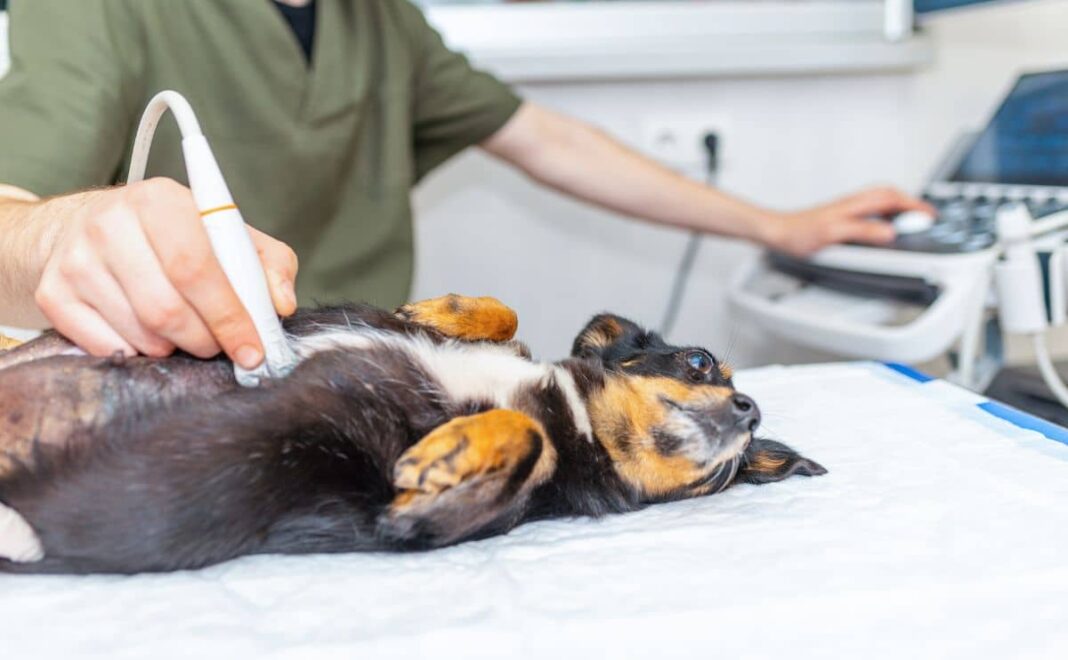
Most emergency vet visits don’t start with surgery. They start with uncertainty.
A dog may begin vomiting, refuse food, and act lethargic. Sometimes the only clue is that something from the house has gone missing.
At that point, the first step for veterinarians is figuring out what’s happening inside the dog’s body.
That usually means diagnostic testing.
X-rays are often used to look for foreign objects in the stomach or intestines. Blood tests may be needed to check for toxins or organ damage.
If the situation still isn’t clear, additional imaging or monitoring may be required.
Once the problem is identified, treatment can escalate quickly.
If a swallowed object is blocking the digestive tract, surgery may be necessary to remove it. In fact, the Cornell Riney Canine Health Center explains that most gastrointestinal foreign body obstructions require surgery.
If a dog has ingested a toxin, the veterinary team may need to induce vomiting, administer medications, and provide IV fluids while the body clears the poison.
Many cases also require overnight hospitalization and monitoring.
Individually, none of these steps seems extreme. But together they add up quickly:
- Emergency exam
- Diagnostic imaging, such as X-rays or ultrasound
- Bloodwork to evaluate organ function
- Surgery to remove the obstruction
- Anesthesia and surgical monitoring
- Overnight hospitalization
- Pain medication and follow-up care
By the time everything is finished, a simple household object can easily turn into a $3,000–$6,000 emergency vet bill.
The hard truth is that many of the items that cause these emergencies are probably sitting somewhere in your home right now.
That’s one reason many dog owners look into pet insurance before an emergency ever happens. Coverage can help turn a sudden multi-thousand-dollar surgery into a much smaller out-of-pocket expense.
8 Everyday Household Items That Can Turn Into A $3,000 Vet Emergency
Let’s take a quick walk through your house and see which everyday items veterinarians worry about the most.
1. The Humble Gym Sock
A sock disappears sometime during the day (which you probably wouldn’t even notice). At first, it doesn’t seem like a big deal until your dog starts vomiting or suddenly refuses food a few hours later.

Socks are among the most common objects veterinarians see in cases of foreign body obstruction, which occurs when something a dog swallows becomes stuck in the stomach or intestines.
Unlike food, fabric doesn’t break down during digestion. Once a sock leaves the stomach, it can easily lodge in the narrow sections of the intestinal tract.
When that happens, food and fluids can no longer move normally through the digestive system. Dogs often begin vomiting, losing their appetite, or becoming lethargic.
If imaging confirms the blockage, surgery is often required to remove the sock before the intestine becomes damaged.
Typical emergency bill:
- Emergency exam: $150–$250
- X-rays: $300–$500
- Bloodwork: $200–$400
- Abdominal surgery: $2,000–$3,500
- Overnight hospitalization: $400–$900
➜ Total bill: $3,500–$6,000+
Your dog’s logic:
“This sock smells exactly like my favorite human.”
2. The Discarded Corn Cob
It usually starts after a cookout or family dinner.
A leftover corn cob gets tossed into the trash, and before anyone notices, your dog has helped themselves.
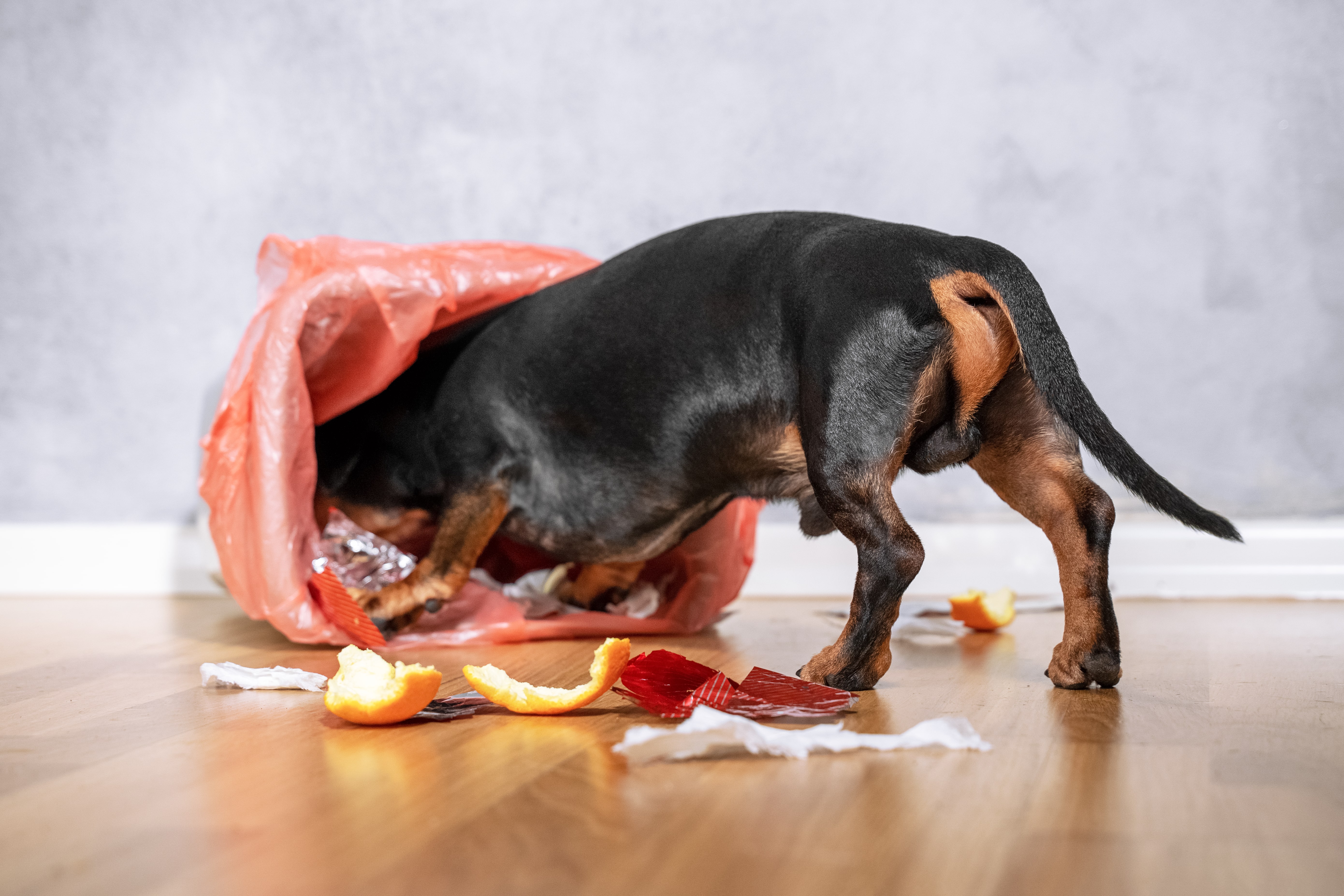
Corn cobs may seem harmless, but veterinarians consider them one of the most common causes of intestinal blockages in dogs.
The reason is simple: corn cobs don’t break down during digestion, and they’re almost perfectly sized to get stuck in a dog’s intestines.
Once lodged, they block the normal movement of food and fluids. Dogs with an obstruction often develop vomiting, loss of appetite, abdominal pain, or lethargy.
In many cases, surgery is the only safe way to remove the cob.
➜ Typical emergency bill: $4,000–$7,000+
Your dog’s logic:
“Smells like dinner… must be dinner.”
3. The Unassuming Hair Tie
They’re tiny, quiet, and easy to overlook. But for many dogs, hair ties look exactly like chew toys.
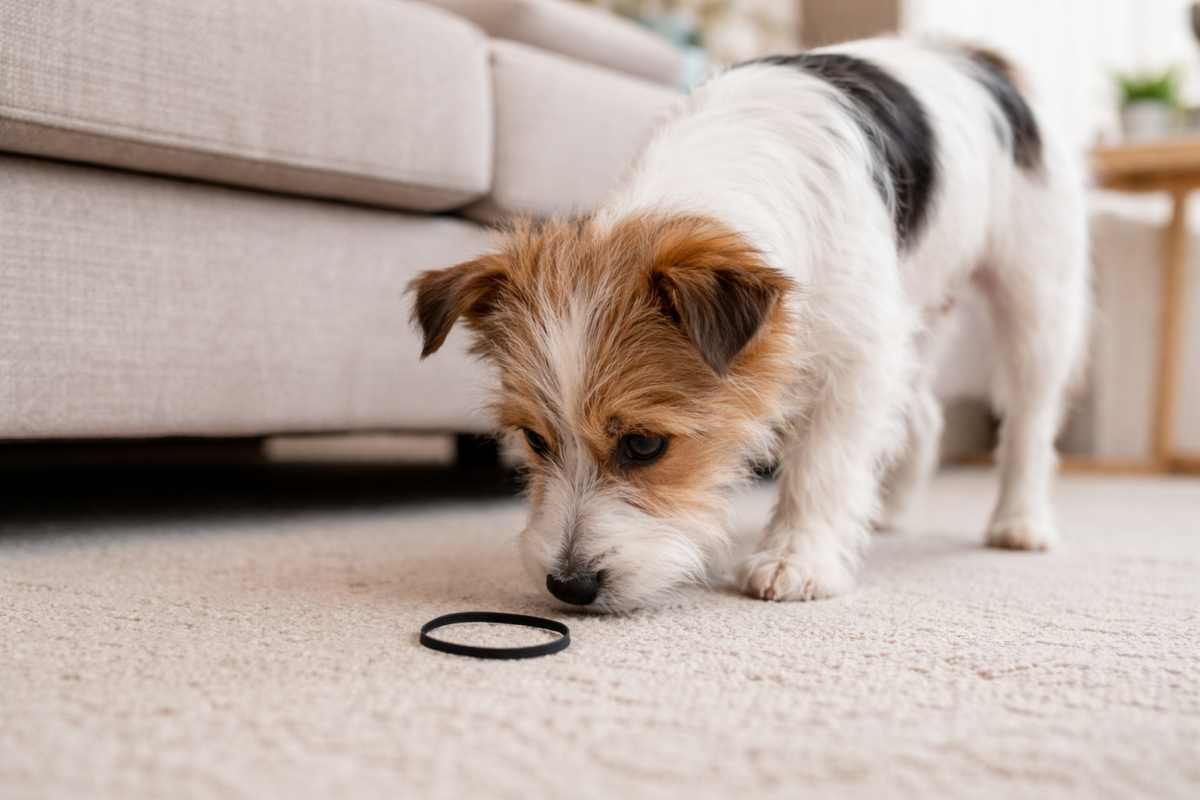
Dogs often find them on bathroom counters, nightstands, or after they slip off someone’s wrist. The elastic texture makes them especially tempting to chew, and some dogs swallow them without hesitation.
Hair ties don’t break down in the digestive system. Once swallowed, they can collect in the stomach or move into the intestines, where they create a blockage.
Veterinarians sometimes discover multiple hair ties during surgery, since dogs often swallow more than one.
Symptoms usually begin with vomiting, loss of appetite, or lethargy.
➜ Typical emergency bill: $3,000–$6,000+
Your dog’s logic:
“Tiny rubber chew toy discovered.”
4. The Rattling Pill Bottle
Dogs are curious, and pill bottles can sound exactly like a container of treats when they hit the floor.
Unfortunately, even a couple of pills can cause serious poisoning in dogs.
According to the Pet Poison Helpline, common OTC drugs like ibuprofen can cause stomach ulcers and kidney damage. At the same time, some antidepressants and ADHD medications can trigger tremors, seizures, or dangerous heart rhythm changes.
When a dog is suspected of swallowing medication, veterinarians often act quickly to prevent the drug from being absorbed into the bloodstream.
Treatment may include inducing vomiting, administering activated charcoal to bind toxins, and monitoring the dog closely while the body clears the medication.
Typical emergency visit
- ER exam: $150
- Bloodwork: $250–$300
- Induced vomiting: $150
- Activated charcoal treatment: $100
- IV fluids and monitoring for 24–48 hours: $1,200–$1,800
➜ Total bill: $1,500–$4,000+
Your dog’s logic:
“If it rattles like treats… it must be treats.”
5. The Innocent Pack of Sugar-Free Gum
A pack of gum left on the coffee table might not seem like a big deal.
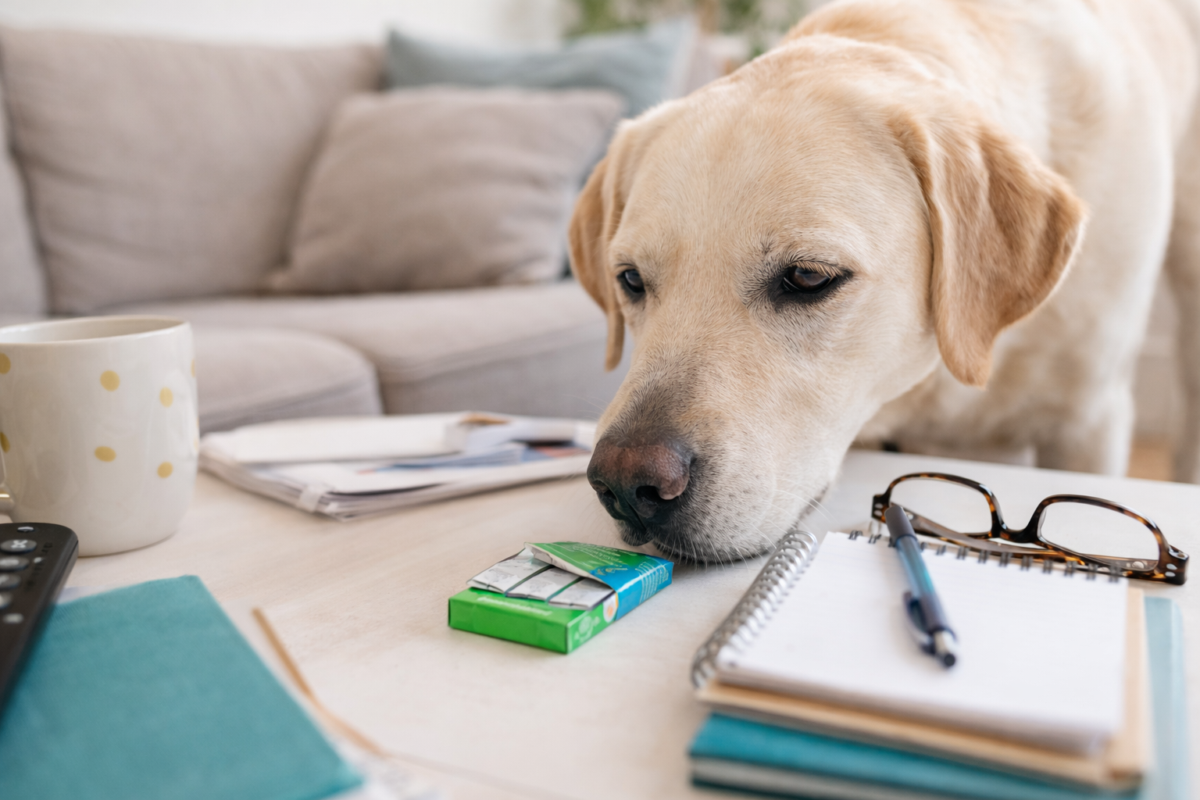
But many sugar-free gums contain xylitol — a sweetener that is extremely toxic to dogs.
In people, xylitol provides sweetness without the calories of sugar. In dogs, xylitol triggers a rapid insulin release, which can cause a dangerous drop in blood sugar.
Symptoms may appear within 30–60 minutes, including:
- Vomiting
- Weakness
- Loss of coordination
- Seizures
In some cases, xylitol exposure can also cause severe liver damage.
Early treatment often includes inducing vomiting, IV fluids, and close blood sugar monitoring.
➜ Typical emergency bill: $2,000–$5,000+
Your dog’s logic:
“Minty bite-sized snack detected.”
6. The Deceptively Dangerous Grapes
A few grapes rolling off the counter might seem harmless. For dogs, they can be anything but.

Grapes and raisins are well known to veterinarians for their potential to cause sudden kidney failure in dogs. The Merck Veterinary Manual notes that even small amounts can trigger serious kidney injury in some dogs.
What makes them particularly dangerous is that the exact toxic compound isn’t fully understood, which means veterinarians can’t reliably predict how a dog will react.
Some dogs develop symptoms within hours, including vomiting, lethargy, and loss of appetite. Without treatment, kidney damage may progress over the following days.
Veterinarians usually treat grape ingestion as a medical emergency.
Typical treatment plan
- Emergency exam: $150–$250
- Induced vomiting: $150
- Bloodwork to check kidney function: $250–$400
- IV fluids and hospitalization for monitoring: $1,500–$4,000
➜ Total bill: $2,500–$6,000+
Your dog’s logic:
“Tiny round fruit falling from the sky? Yes!”
7. The Sneaky Piece of String
At first glance, a simple piece of string doesn’t seem dangerous.
But in veterinary medicine, string, ribbon, dental floss, and yarn can cause one of the most serious foreign-body emergencies. These are known as linear foreign bodies.
When swallowed, one end of the string may anchor in the stomach while the rest moves into the intestines. As the digestive tract continues moving, the intestines can bunch up along the string.
In severe cases, the string can cut into the intestinal wall, causing damage that requires immediate surgery.
➜ Typical emergency bill: $3,000–$7,000+
Your dog’s logic:
“Moving string snake captured.”
8. The Treacherous Cooked Bone
Giving a dog a bone might feel like a classic treat.
But veterinarians frequently see injuries caused by cooked bones, especially leftovers like chicken wings, ribs, or steak bones.
Cooked bones become brittle and prone to splintering.
Sharp fragments can:
- Crack teeth
- Cut the mouth or throat
- Become lodged in the digestive tract
One of the most common outcomes is a fractured tooth, which exposes the sensitive inner pulp and causes significant pain.
Treating a broken tooth often requires a veterinary dental procedure such as extraction or a root canal.
In other cases, bone fragments create intestinal blockages requiring emergency surgery.
➜ Typical emergency bill:
- Dental fracture treatment: $1,500–$3,000
- Obstruction surgery: $3,000–$6,000+
Your dog’s logic:
“Crunchy bone treasure acquired.”
Other Household Hazards Dogs Get Into More Often Than You’d Think
Swallowing socks and corn cobs isn’t the only way curious dogs end up at the emergency vet.
Veterinarians also treat many accidents involving everyday household hazards that don’t immediately appear dangerous.

1. Toxic Houseplants
Many common houseplants can be dangerous if dogs chew on them. Plants like sago palms, lilies, and certain philodendrons can cause serious poisoning.
Even small amounts may trigger vomiting, diarrhea, or organ damage, depending on the plant.
2. Household Cleaners
Cleaning products are another common culprit. Bleach, disinfectants, and detergent pods can cause burns to the mouth and digestive tract if swallowed.
Curious dogs may investigate open containers under sinks or accidentally ingest cleaning solutions while exploring.
3. Broken Dog Toys
Ironically, some emergencies begin with items designed for dogs.
If a toy breaks apart, dogs may swallow pieces of rubber, squeakers, or stuffing. Once inside the digestive tract, those fragments can behave just like socks or hair ties, creating dangerous blockages.
4. More Trash Can Surprises
Kitchen trash cans are full of tempting smells.
Moldy food, fatty leftovers, coffee grounds, chocolate, and food packaging can all lead to digestive problems, poisoning, or intestinal blockages.
Depending on the situation, treatment for these incidents can still range from $1,500 to $4,000 or more.
For many dogs, the problem isn’t a single object. It’s that the whole house smells like a buffet.
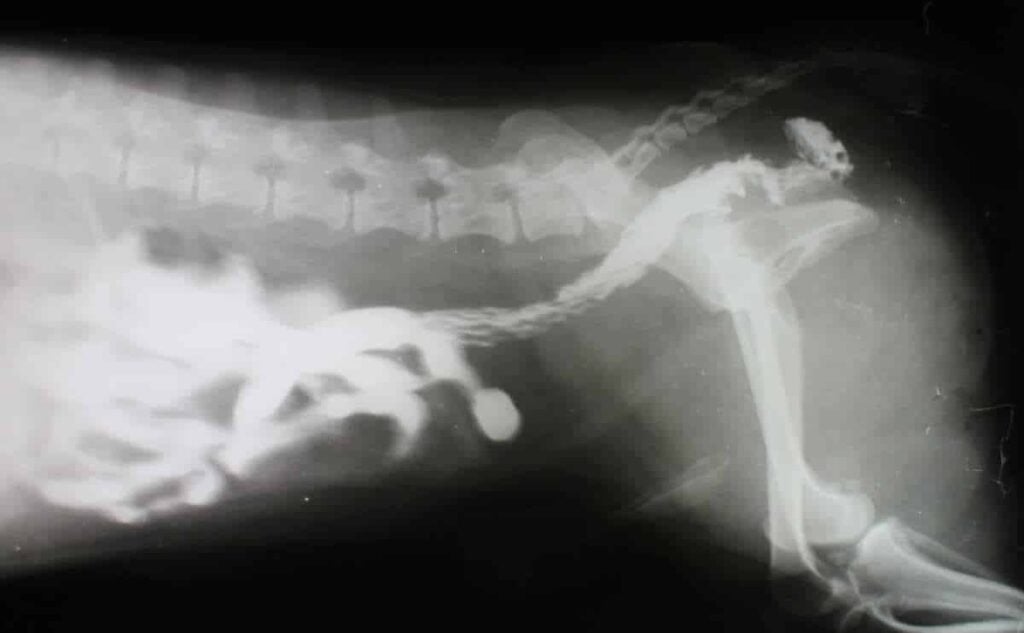
Vet Confessions: The Weirdest Things Dogs Have Ever Eaten
Veterinarians see a lot of strange things during emergency exams and surgeries.
While socks, corn cobs, and pieces of string are some of the most common offenders, the list of unusual items dogs have swallowed over the years is surprisingly long.
Sometimes the X-ray reveals the problem immediately. In other cases, the object only becomes clear once surgery begins.
Many clinics even keep photos of unusual foreign objects as reminders of just how unpredictable dogs can be.
Veterinary teams have reported finding things like:
- 24 socks inside a single dog’s stomach
- Pink glittery underwear
- A 42-inch braided leather belt
- An entire boot
- A light bulb
- A Teenage Mutant Ninja Turtle toy
See some examples here:
Stories like these might sound funny afterward, but the surgery required to remove them rarely is.
Veterinary Reality Check
Many foreign-body surgeries happen late at night after a dog gets into something when no one is watching.
Signs Your Dog May Have Swallowed Something Dangerous
One challenge with household hazards is that dogs often swallow objects when no one is watching.

In many cases, the first sign of trouble is a sudden change in behavior.
Some of the most common warning signs include:
If your dog shows these symptoms, especially after something has gone missing around the house, it’s best to contact your veterinarian or an emergency clinic as soon as possible.
Early treatment can sometimes prevent a minor incident from becoming a serious medical emergency.
Why These Accidents Become Financial Emergencies
When a dog swallows something dangerous, time matters.
Veterinarians often need to move quickly to determine what happened and prevent the situation from worsening. That usually means diagnostic tests, such as X-rays or bloodwork, to identify the problem.
If the object is causing a blockage, immediate surgery may be required to remove it before the intestine becomes damaged.
In cases of poisoning, dogs may need immediate treatment with medications, IV fluids, and close monitoring while their bodies clear the poison.
Because these situations often develop suddenly, treatment is usually provided in emergency or urgent-care settings, where costs are naturally higher than for routine vet visits.
The result is that what began as a simple household accident can quickly become a medical emergency costing thousands of dollars to treat.
The Safety Net: Preparing For The Unexpected
Most dog owners don’t think about emergency veterinary costs until they’re suddenly facing one.
The reality is that accidents are unpredictable. Even careful owners can’t prevent every situation where a curious dog finds something they shouldn’t eat.
At the same time, modern veterinary medicine is incredibly advanced. Veterinarians can perform complex surgeries, advanced imaging, and intensive care, saving countless pets every year.
The downside is that this level of care can also be expensive.
Many pet owners prepare for emergencies with pet insurance. Rather than facing a sudden $3,000–$6,000 vet bill all at once, a policy spreads that financial hardship out through monthly premiums and can help you manage the cost of a major emergency.
For many owners, that financial safety net means they can focus on getting their dog the care they need rather than worrying about the cost of treatment. Use the form below to see what your safety net would look like.

Quick Household Prevention Checklist
While accidents can happen to any dog, a few simple precautions can reduce the risk of common household emergencies.
- Remove small items from your floors that your dog could find enticing
- Keep laundry baskets covered or out of reach
- Store medications in secure containers or cabinets
- Avoid leaving sugar-free gum, candy, and chocolate within reach
- Supervise dogs when giving bones or chew items
- Use trash cans with secure lids in kitchens and bathrooms
Small habits like these can make a big difference in preventing curious dogs from turning everyday objects into dangerous snacks.
Frequently Asked Questions
Dogs have a talent for finding things they shouldn’t eat, and many pet owners have questions about what to do when it happens. Here are a few of the most common concerns veterinarians hear. Don’t see your question here? Ask us in the comments.
What Should I Do If My Dog Eats Something They Shouldn’t?
If you believe your dog swallowed a potentially dangerous object or toxin, contact your veterinarian or an emergency clinic right away. Early treatment can sometimes prevent serious complications, especially if a vet can safely induce vomiting before the item moves deeper into the digestive tract.
If you’re unsure whether something is toxic, you can also call the Pet Poison Helpline at 855-764-7661 for guidance.
How Do I Know If My Dog Has A Blockage?
Signs of an intestinal blockage often include repeated vomiting, loss of appetite, lethargy, abdominal pain, or difficulty passing stool.
Foreign objects such as socks, toys, and corn cobs can become lodged in the digestive tract, preventing food from moving normally through the intestines. In many cases, surgical removal is required to resolve the obstruction.
How Quickly Can A Swallowed Object Become Dangerous?
In some cases, problems can develop within hours. Objects that cause intestinal blockages may lead to vomiting and abdominal pain fairly quickly, while certain toxins can begin affecting a dog’s body soon after ingestion.
Because it’s difficult to predict how a dog will react, veterinarians generally recommend seeking advice as soon as possible if you suspect your dog swallowed something harmful.
Are Some Dogs More Likely To Swallow Strange Objects?
Yes. Puppies, young dogs, and highly curious breeds are often more prone to chewing and swallowing unusual items.
Veterinarians frequently see cases involving Labrador Retrievers, Beagles, Golden Retrievers, and other highly food-motivated breeds, since these dogs tend to investigate anything that smells interesting.
In fact, some veterinarians jokingly say that Labradors will attempt to eat almost anything that isn’t nailed down.
Terriers and sporting breeds can also be frequent offenders because of their high curiosity and tendency to grab objects quickly during play.
Providing plenty of exercise, enrichment toys, and supervision can help reduce the risk of dogs exploring household items with their mouths.
Can Pet Insurance Help Cover Emergencies Like This?
Many pet insurance plans cover unexpected accidents and foreign-body surgeries, which are among the most common veterinary emergencies. Instead of paying the entire cost of a sudden surgery out of pocket, coverage may reimburse a portion of the bill depending on the policy.
Is Pet Insurance Worth It For Your Pup?
Before your dog discovers their next mystery snack, it’s worth checking what a safety net would look like for your pet. Understanding your pet insurance coverage options now can help ensure that, if something unexpected happens, the focus stays on getting your beloved dog the care they need.
What’s the weirdest thing your dog has ever tried to eat? Let us know in the comments — you might be surprised how many other owners have experienced the exact same thing.