

Seeing Flood Zone AE on a Jacksonville flood map can feel like an instant deal breaker.
Does it automatically mean high flood insurance costs and closing delays?
Flood Zone AE often gets the blame, but it is rarely the real problem.
In Jacksonville, flood insurance pricing is driven far more by property-specific risk factors than by the flood zone label alone. When those factors are misunderstood or reviewed too late, buyers and sellers experience last-minute surprises that erode trust and stall transactions.
In this article, you will learn the five factors that impact flood insurance more than Flood Zone AE, why they matter in Jacksonville neighborhoods, and how to approach flood insurance with clarity instead of fear.
Flood Zone AE Gets the Blame, But It Is Rarely the Real Problem
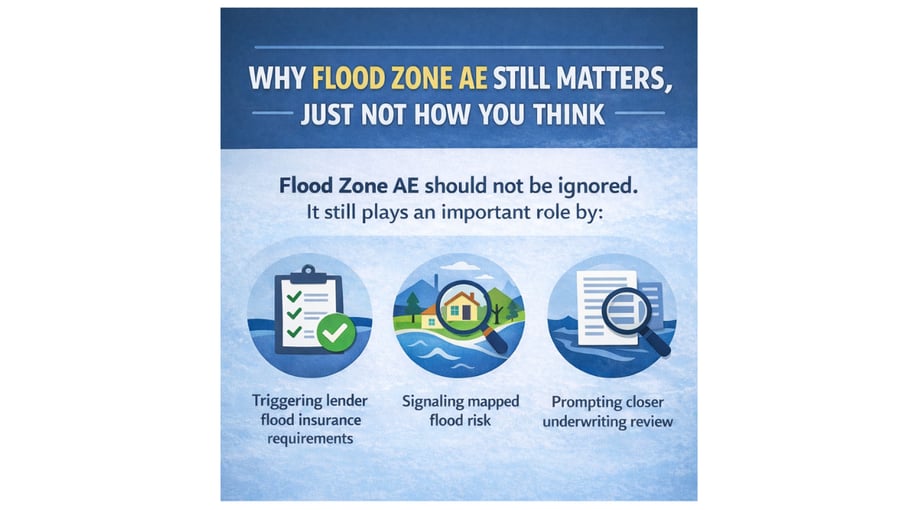
Flood Zone AE signals mapped flood risk and often triggers lender requirements, but it does not drive pricing the way most people believe.
What actually determines flood insurance cost is how your specific property interacts with water, elevation, and construction risk. That is why two homes in the same flood zone, even on the same street, can have dramatically different premiums.
Below are the five most important factors we see impacting flood insurance across Jacksonville.
1. Proximity to Water, Rivers, Creeks, and Marshes
Distance to water is often a stronger pricing factor than flood zone.
In Riverside and Avondale (32205), homes located several blocks inland may sit in Flood Zone AE yet carry reasonable flood insurance costs. Meanwhile, similar homes closer to the St. Johns River or tidal creeks often see higher premiums, even with the same zone designation.
Key takeaway: Two Flood Zone AE homes can have very different premiums based solely on proximity to moving water.
2. Floodway Status, Often More Important Than AE
If there is one designation that deserves more attention than Flood Zone AE, it is floodway status. Floodways are areas designed to carry moving floodwaters during major flood events.
In Ortega (32210), floodway boundaries cut through neighborhoods where homes share the same flood zone but experience very different insurance outcomes. Similar patterns exist in parts of Arlington (32211) near creeks and low-lying corridors.
Key takeaway: Floodway status frequently impacts flood insurance cost more than Flood Zone AE alone.
3. Elevation and Freeboard, The Quiet Cost Saver
Elevation is one of the most powerful pricing factors in flood insurance.
In Mandarin (32217 and 32223), many homes are mapped in Flood Zone AE. However, properties built with additional elevation or natural grade advantages often carry significantly lower premiums than nearby lower-elevation homes.
This also applies to newer construction across Duval County. Homes built to higher elevation or freeboard standards consistently perform better for flood insurance pricing than older homes built closer to ground level.
Key takeaway: A well-elevated Flood Zone AE home can cost less to insure than a poorly elevated home in a lower-risk zone.
4. Flood Loss History, The Late-Stage Surprise
Flood loss history follows the property, not the owner, and it can outweigh flood zone entirely.
In older areas of San Marco and Riverside, prior flood claims sometimes surface late in the buying process. When they do, premiums can increase even though the flood zone has not changed.
Key takeaway: Prior flood losses often matter more than Flood Zone AE and are a common reason flood insurance surprises appear before closing.
5. Construction Details, Older vs. Newer Jacksonville Homes
How a home is built can outweigh flood zone labels completely.
In historic Riverside and Springfield, older slab-on-grade homes with limited flood openings often price higher than newer elevated homes, even when both are in Flood Zone AE.
Across newer developments in Duval County, homes built with elevated foundations, proper flood openings, and modern materials often qualify for more favorable flood insurance pricing.
Key takeaway: Two Flood Zone AE homes can have very different premiums simply because one was built with flood risk in mind and the other was not.
Flood Zone AE and Jacksonville Flood Insurance FAQs
Does Flood Zone AE automatically mean high flood insurance costs in Jacksonville?
No. Flood Zone AE signals mapped risk and lender requirements, but pricing is driven more by elevation, floodway status, proximity to water, construction, and loss history.
Can two homes in Flood Zone AE have very different flood insurance premiums?
Yes. Two AE homes can price very differently depending on elevation, floodway location, distance to water, and prior flood losses.
What is a floodway, and why does it matter so much?
A floodway is the area designed to carry floodwaters during major events. Homes in floodways often face higher premiums and fewer insurance options.
Can flood loss history affect my premium even if the flood zone has not changed?
Yes. Prior flood claims stay with the property and can significantly impact pricing regardless of flood zone.
Flood Zone AE Is Not the Full Story
Flood Zone AE gets the most attention, but it is rarely what truly drives flood insurance cost in Jacksonville.
What matters most is how your specific property interacts with water, elevation, construction, and historical risk. When those factors are reviewed early and accurately, flood insurance becomes far more predictable and manageable.
If you want clarity instead of confusion, the next step is simple. Download our Florida Flood Insurance Guide below and make decisions based on facts, not fear.